



Modern Approach to Restoring Movement, Reducing Pain, and Returning to an Active Life
Back, neck, shoulder, or knee pain often develops not only because of injury or overload. In many cases, the root cause is muscle dysfunction, poor joint stabilization, incorrect movement patterns, and prolonged sitting. In such situations, medications may temporarily reduce symptoms but do not address the underlying cause of the problem.
That is why modern rehabilitation increasingly relies on the Neurac method — an active recovery system focused on identifying and eliminating the causes of pain through proper muscle activation and restoration of movement control.
What Is the Neurac Method?
Neurac (Neuromuscular Activation) is a neuromuscular activation method developed in Norway. It is used to treat musculoskeletal pain, support post-injury recovery, and improve overall functional movement.
The core idea behind the method is simple: when the body moves incorrectly, some structures become overloaded while others become “inactive.”
As a result, the following may occur:
- chronic pain;
- stiffness;
- muscle weakness;
- joint instability;
- recurrent flare-ups.
The Neurac method helps retrain the body to move correctly again.
What Is the Core Principle of the Method?
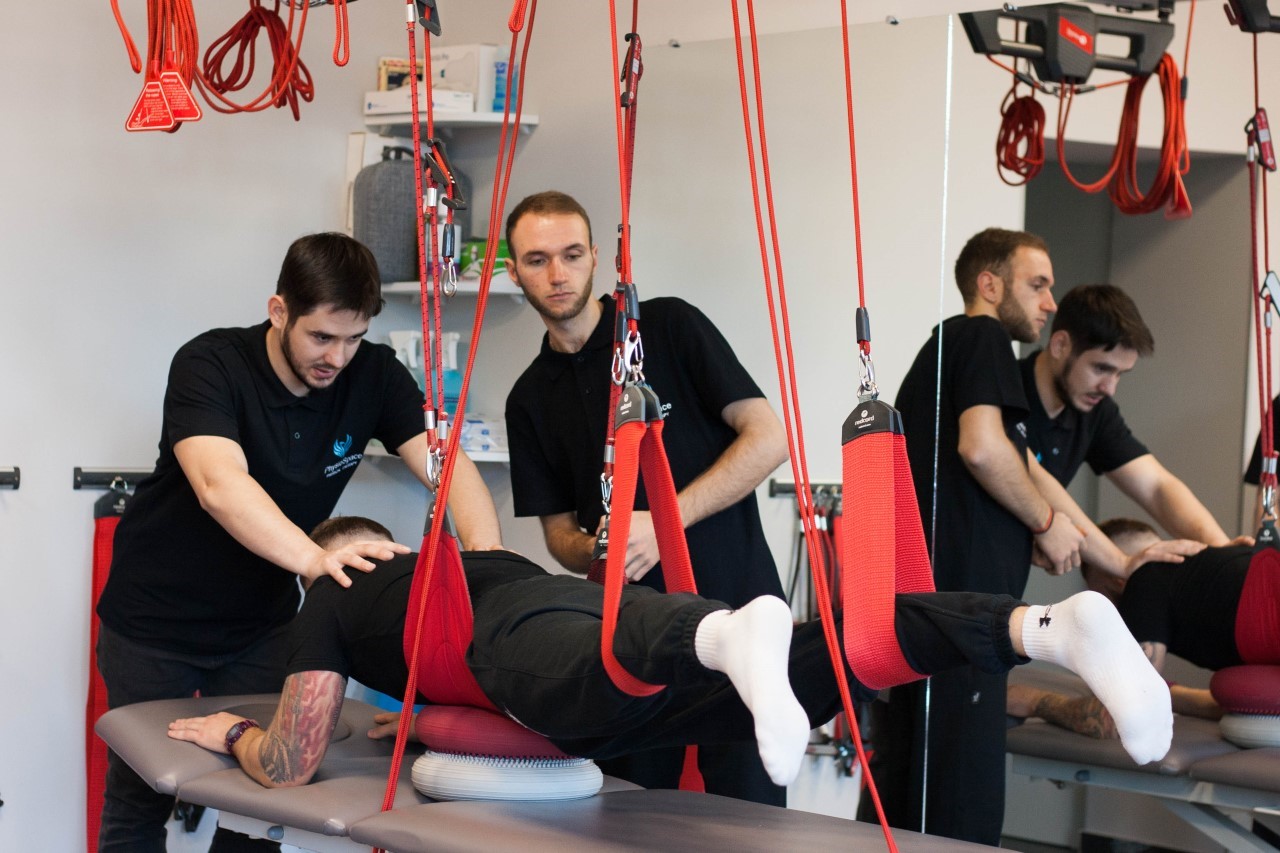
During sessions, the patient performs individually selected exercises in a suspension system. This allows therapists to:
- reduce stress on the joints;
- isolate weak muscle groups;
- activate deep stabilizing muscles;
- restore symmetrical body function;
- eliminate compensatory movement patterns that cause pain.
In other words, the patient is not simply exercising — they are undergoing neuromuscular re-education.
How Does the Neurac Method Work?
1. Identifying Weak Links
During the assessment, the specialist determines:
- which muscles are underperforming;
- where instability is present;
- which movements provoke pain;
- which areas compensate for excessive load.
For example, lower back pain may originate not from the spine itself, but from weak gluteal or abdominal muscles.
2. Targeted Activation of Specific Muscles
Suspension exercises activate the structures that often fail to engage during everyday activities.
This is especially important for:
- deep abdominal muscles;
- spinal stabilizers;
- scapular muscles;
- pelvic stabilizers;
- small stabilizing muscles of the knee and shoulder.
3. Restoring Proper Movement
After activation, the body begins to move more efficiently:
- muscle tension decreases;
- posture improves;
- movements become easier;
- pain gradually subsides.
Why Is the Method Effective for Pain?
Pain often develops not because of “wear and tear,” but due to:
- incorrect load distribution;
- weak stabilizing muscles;
- loss of movement control;
- chronic muscular overstrain.
Neurac specifically targets these underlying causes. As a result, outcomes are often more sustainable than massage therapy or temporary pain relief alone.
What Conditions Can the Neurac Method Help With?
Spine:
- lower back pain;
- acute back spasms;
- disc herniations and protrusions (as part of комплексної rehabilitation);
- back stiffness;
- pain between the shoulder blades.
Neck:
- neck tension;
- tension headaches;
- pain caused by prolonged sitting;
- restricted movement.
Joints:
- knee pain;
- shoulder instability;
- hip joint pain;
- post-injury recovery.
Postoperative Rehabilitation:
- after arthroscopy;
- after ligament injuries;
- after fractures (with physician approval).
What Is Redcord and Why Is It Used with Neurac?
The Neurac method is most commonly performed using the Redcord system — professional suspension equipment designed for rehabilitation.
Redcord allows therapists to:
- precisely control loading;
- work without axial compression;
- perform exercises without pain;
- gradually increase exercise difficulty;
- activate even “inactive” muscles.
The combination of the Neurac method and the Redcord system provides highly effective rehabilitation outcomes.
How Is Neurac Different from Regular Exercise?
Traditional Exercises:
- are often generic;
- do not address weak functional links;
- may provoke pain;
- primarily load superficial muscles.
The Neurac Method:
- includes individualized assessment;
- targets the root cause of dysfunction;
- focuses on movement quality and technique control;
- addresses the source of pain;
- supports gradual functional recovery.
Are the Sessions Painful?
No. One of the core principles of the method is pain-free movement.
Exercises are selected so the patient can work comfortably. If an exercise causes discomfort, the specialist adjusts the position, level of support, or loading.
How Many Sessions Are Needed?
The number of sessions depends on the individual condition.
Mild functional dysfunctions: 5–8 sessions
Chronic pain: 10–15 sessions
Post-injury / complex cases: individualized rehabilitation plan
Many patients notice the first positive changes after just a few sessions.
Who Is the Method Suitable For?
- office workers;
- athletes;
- drivers;
- people recovering from injuries;
- individuals with sedentary lifestyles;
- people experiencing recurrent pain flare-ups.
Main Advantages of the Neurac Method
Drug-Free Approach
The focus is on treating the cause rather than only the symptoms.
Safety
Loading is carefully controlled and individually adjusted.
Individualized Treatment
Each rehabilitation program is tailored to the patient’s specific condition.
Long-Term Results
The body learns to function correctly again.
Return to Activity
Sports, work, and daily life without fear of movement.
When Should You Seek Help?
If you experience:
- recurrent back pain;
- constant neck tension;
- knee pain while walking;
- little or no improvement from YouTube exercises;
- only short-term relief from massage;
- a desire to recover without relying on medication.
Conclusion
The Neurac method is a modern evidence-based rehabilitation approach that helps restore proper muscle function, reduce pain, and improve freedom of movement.
It is not a “magic procedure,” but a systematic approach to restoring body function that delivers real results where symptomatic treatment alone is ineffective.
If your pain is related to impaired movement control, weak stabilizers, or improper loading patterns, the Neurac method may be an effective solution.
Book a Consultation
To determine whether the Neurac method is suitable for you, it is best to undergo a functional assessment with a specialist. Based on the evaluation, an individualized recovery plan can be created to help you return to an active and pain-free life.