



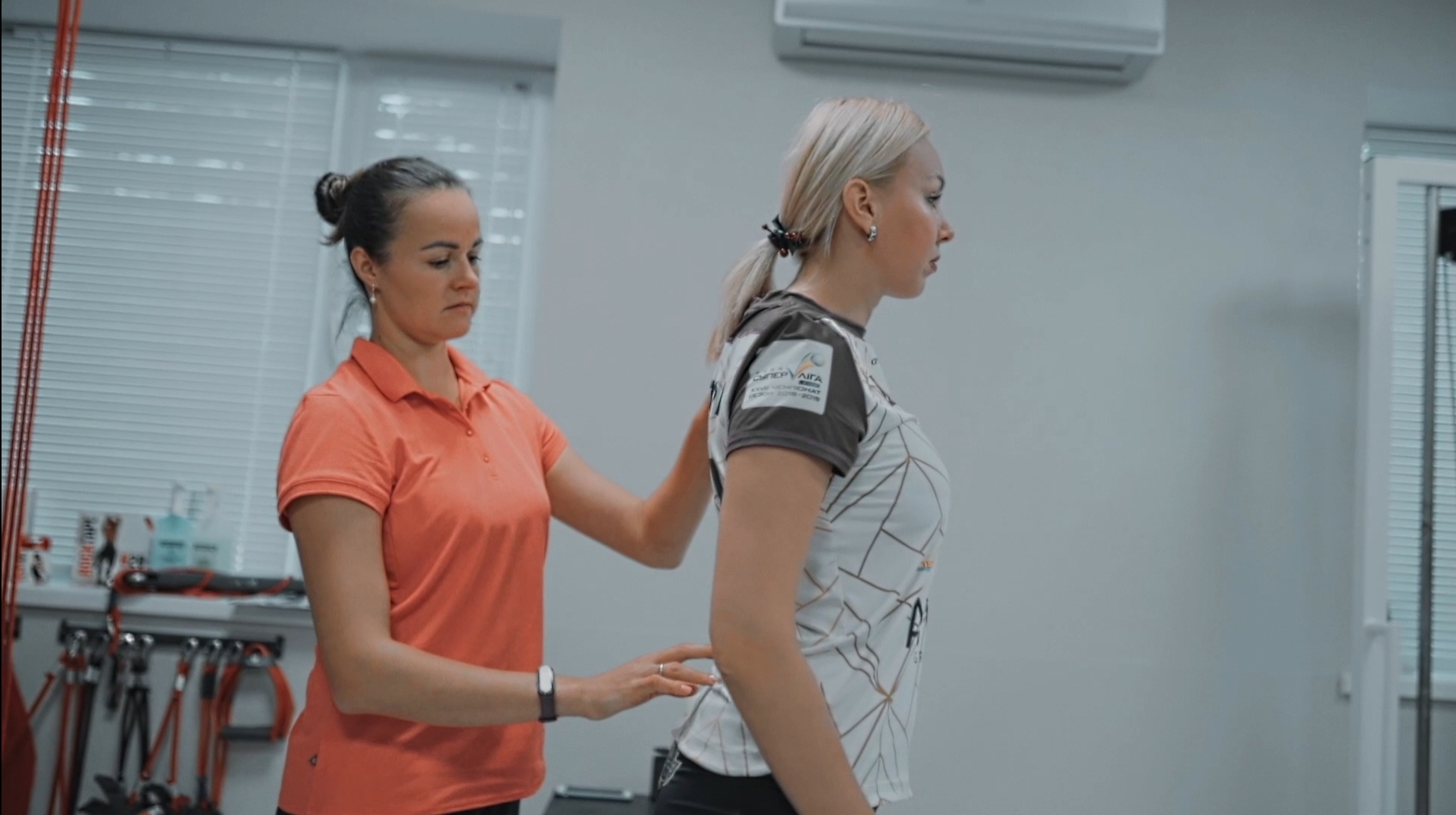
Posture disorders are one of the most common problems of modern life. A sedentary lifestyle, computer work, smartphone use, and lack of physical activity lead to changes in body alignment in both adults and children.
Many people see poor posture only as an aesthetic issue. In reality, it is a much deeper problem that can lead to back pain, neck pain, headaches, and even impaired function of internal organs.
In this article, we will discuss how to identify posture disorders, why they develop, and how to correct them effectively.
What Is Proper Posture?
Posture is the habitual position of the body both at rest and during movement.
Proper posture is characterized by:
- an aligned head position
- natural spinal curves
- symmetrical shoulders
- even load distribution
In this position, muscles work efficiently, and stress on the joints and spine is minimized.
Main Types of Posture Disorders
1. Slouched Posture (Kyphotic Posture)
Characterized by:
- rounded shoulders
- a forward head position
- an exaggerated thoracic curve
2. Hyperlordosis
An excessive curve in the lower back:
- the abdomen protrudes forward
- the pelvis tilts
3. Scoliosis
A sideways curvature of the spine:
- uneven shoulders
- pelvic asymmetry
4. Forward Head Posture (“Text Neck”)
A modern posture issue characterized by:
- the head pushed forward
- increased strain on the neck
Causes of Posture Disorders
In Adults:
- sedentary work
- lack of physical activity
- poor workstation setup
- stress and muscle tension
- old injuries
In Children:
- prolonged sitting at school desks
- gadgets (phones, tablets)
- weak core muscles
- rapid growth
How to Identify Posture Problems Yourself
There are several simple ways to check your posture.
Wall Test
Stand with your back against a wall:
- your heels, buttocks, shoulder blades, and head should touch the wall
- there should be a small gap between your lower back and the wall
If:
- your head does not touch the wall
- or your lower back arches excessively,
this may indicate a posture disorder.
Visual Assessment
Pay attention to:
- whether your shoulders are level
- whether your pelvis is symmetrical
- whether your head tilts forward
Symptoms That May Indicate a Problem
- back or neck pain
- quick fatigue
- headaches
- restricted movement
- discomfort during prolonged sitting
Why It Is Important to Correct Posture
Ignoring posture problems may lead to:
- chronic pain
- degenerative spinal changes
- disc protrusions and herniations
- reduced physical activity
- breathing difficulties
It is especially important to address posture issues in children because their bodies are still developing.
How to Correct Posture: An Effective Approach
The main rule is: posture cannot be corrected by “willpower” alone.
Constantly trying to “sit up straight” is ineffective and quickly leads to fatigue.
A comprehensive approach is needed.
1. Physical Therapy
This is the foundation of posture correction.
It includes:
- muscle strengthening exercises
- stretching tight areas
- restoring muscular balance
Programs are tailored individually.
2. Strengthening the Core Muscles
Special attention is given to:
- back muscles
- deep core stabilizers
- neck muscles
Strong muscles naturally support proper body alignment.
3. Mobility Work
It is important to:
- improve thoracic spine mobility
- increase shoulder mobility
- reduce stiffness
4. Developing New Habits
Without this, results are usually temporary.
It is necessary to:
- sit properly
- adjust the workstation ergonomically
- monitor body positioning
5. Using Modern Rehabilitation Methods
For example:
- suspension systems (Neurac)
- functional training
These methods help the body relearn proper movement patterns more effectively.
Do Posture Braces Help?
Braces can be useful in certain situations (for example, scoliosis in children), but:
- they do not strengthen muscles
- long-term use may even weaken them
Therefore, they should only be used under professional guidance.
How Long Does It Take to Correct Posture?
This depends on:
- age
- severity of the condition
- consistency of exercise
On average:
- first improvements appear within 3–4 weeks
- stable results require about 2–3 months
In children, the process is usually faster.
When to See a Specialist
You should consult a physical therapist if:
- there are visible posture problems
- back or neck pain develops
- a child is constantly slouching
- there is body asymmetry
- self-guided exercises are not effective
Prevention of Posture Disorders
To avoid posture problems or prevent recurrence:
- stay physically active
- take breaks during work
- keep your screen at the proper height
- perform back-strengthening exercises
- limit excessive gadget use
For children:
- set up an ergonomic study area
- monitor backpack weight
- encourage regular physical activity
Conclusion
Posture disorders are not only about appearance but also about the health of the entire body. Early diagnosis and the right approach allow effective correction in both adults and children.
Modern physical therapy helps:
- restore muscular balance
- reduce pain
- develop proper movement habits
The earlier you start working on posture, the easier it is to achieve lasting results.