



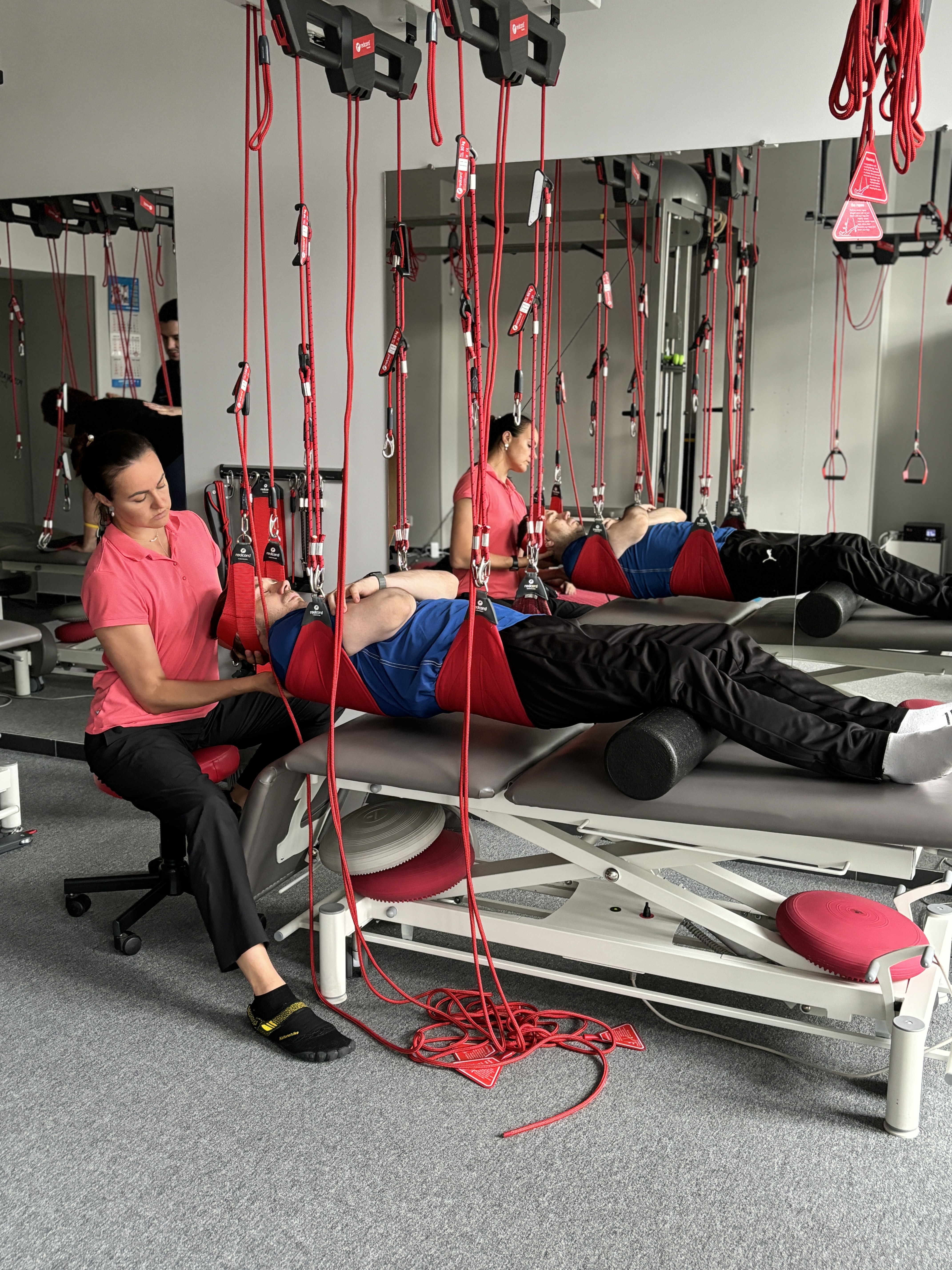
Sedentary work is one of the main causes of chronic back and neck pain. Most people spend 6–10 hours a day working at a computer, often without breaks and without posture awareness. As a result, the following symptoms appear:
- neck pain
- tension between the shoulder blades
- lower back discomfort
- headaches
And the worst part — these symptoms gradually become “normal”.
In this article, we will cover:
- why sedentary work causes pain
- which structures are overloaded
- how to relieve symptoms
- how rehabilitation is carried out
- what to do to prevent pain from returning
Why sedentary work causes back and neck pain
The human body is not designed for prolonged sitting. When we sit for long periods:
- some muscle groups become overstrained
- others become weakened
- blood circulation decreases
- posture changes
This results in muscle imbalance and spinal overload.
What is most commonly affected
1. Neck (cervical spine)
When working at a computer, the head often shifts forward.
This leads to:
- neck muscle overstrain
- headaches
- stiffness
2. Upper back (between the shoulder blades)
Due to slouched posture:
- the thoracic spine becomes “closed”
- muscles become stiff
3. Lower back
Prolonged sitting:
- reduces activation of deep stabilizing muscles
- increases load on spinal discs
Main causes of pain during sedentary work
1. Poor posture
The most common issue:
- forward head posture
- rounded shoulders
- slouched back
2. Lack of movement
Sitting for more than 30–60 minutes:
- reduces blood circulation
- causes muscular stagnation
3. Weak muscular core
If the muscles of:
- core
- back
- scapular stabilizers
are weak, the spine takes on all the load.
4. Improper workstation setup
- monitor too low or too high
- incorrect chair height
- lack of back support
5. Stress
Psychological and emotional tension:
- increases muscle tone
- amplifies pain
Symptoms that should not be ignored
- persistent neck or back pain
- morning or post-work stiffness
- tension-type headaches
- numbness in the hands
- feeling of tightness
How to relieve neck and back pain
1. Reduce load
The first step:
- reduce continuous sitting time
- take breaks every 30–60 minutes
2. Movement activity
Even simple actions help:
- walking
- light mobility exercises
- changing positions
3. Exercises for neck and spine
Physical therapy includes:
- neck mobilization
- thoracic spine exercises
- scapular muscle activation
- lumbar stabilization
4. Relaxation of overstrained muscles
Used methods:
- soft manual techniques
- myofascial release
- breathing exercises
5. Strengthening weak muscles
Especially important:
- deep core muscles
- back muscles
- scapular stabilizers
Rehabilitation after sedentary work
Phase 1: Pain reduction
- reduced muscle tension
- gentle movements
- restoration of baseline condition
Phase 2: Mobility restoration
- neck
- thoracic spine
- shoulder girdle
Phase 3: Muscle strengthening
- spinal stabilization
- movement control
- endurance
Phase 4: Habit formation
- correct posture
- workstation ergonomics
- regular breaks
How to properly set up a workstation
Monitor
- at eye level
- not too low or too high
Chair
- lumbar support
- feet flat on the floor
Keyboard and mouse
- relaxed arms
- elbows close to the body
Simple prevention routine
Every 30–60 minutes:
- stand up
- walk around
- perform neck and back movements
Every day:
- 10–20 minutes of exercise
- stretching
- light physical activity
Common mistakes
❌ “Just endure it”
Pain does not resolve on its own with sedentary work.
❌ Only massage
Massage provides temporary relief but does not address the cause.
❌ No movement
Complete rest only worsens the condition.
When to see a physical therapist
- pain lasts more than 1–2 weeks
- symptoms keep recurring
- numbness appears
- pain affects work
- exercises have no effect
Conclusion
Back and neck pain from sedentary work is not a coincidence, but a natural result of prolonged overload and poor movement habits.
Modern physical therapy helps:
- reduce pain
- restore mobility
- strengthen muscles
- build healthy habits
The key is not just to relieve symptoms, but to change movement and work habits.
This ensures long-term results and restores comfort in everyday life.