



MRI shows no pathological findings, blood tests are normal, and any fracture or surgery is far in the past. Despite this, exhausting pain in the back, neck, or joints continues to bother daily. Many patients in such a situation begin to doubt their own sanity or endlessly search for hidden infections and mythical spinal misalignments.
In reality, the cause lies not in damage to muscles or bones, but in the functioning of our brain and spinal cord. In this article, we will explore how the natural adaptability of the nervous system—neuroplasticity—can play a cruel trick and turn chronic pain into an independent condition, and how modern physiotherapy helps break this vicious cycle.
When the brain remembers trauma: how neuroplasticity maintains chronic pain
Neuroplasticity is the brain’s ability to change its structure and create new neural connections based on experience. Thanks to it, we learn to play instruments, memorize languages, and regain movement after strokes. However, this process works both ways.
If real pain after an injury lasts too long, the nervous system becomes accustomed to generating pain signals. Constant bombardment of the brain with danger impulses leads to the formation of strong, “well-worn” pain neural pathways. As a result, the original tissue damage has already fully healed, but the brain continues to reproduce the sensation of discomfort out of habit, protecting an area that is no longer under threat.
What is central sensitization: when the nervous system becomes overly sensitive
The key mechanism through which chronic pain becomes established is central sensitization—a pathological increase in the sensitivity of neurons in the spinal cord and brain. This is a state in which the body’s danger-warning system starts to malfunction. It lowers the excitation threshold, and the brain begins to interpret normal bodily signals as threats.
In central sensitization, two characteristic phenomena occur:
- Hyperalgesia — when minor discomfort (for example, light pressure on a muscle) is perceived as strong, unbearable pain.
- Allodynia — when a pain response is triggered by a stimulus that normally does not cause pain at all (touching clothing on the skin, light joint movement, or temperature changes).
Acute pain vs chronic pain: what is the biological difference?
To understand why standard treatments (ointments, injections, anti-inflammatory drugs) do not help, it is necessary to clearly distinguish these two conditions.
| Parameter | Acute pain | Chronic pain |
| Main function | Protective signal (symptom of real tissue damage) | False signal (independent nervous system pathology) |
| Duration | From a few days up to 3 months (while healing occurs) | More than 3–6 months (persists after tissue recovery) |
| Localization | Clearly defined (specific joint, muscle) | Often diffuse, migratory, spreading to other areas |
| Effective treatment | Rest, medication, local physiotherapy | “Rewiring” the brain through movement, cognitive methods |
(According to the International Association for the Study of Pain [IASP], ineffective treatment of acute pain in 20% of cases leads to the development of chronic neuroplastic conditions due to changes in the cerebral cortex).
Modern physiotherapy methods for “rewiring” the nervous system
Since the problem lies in how the brain processes information, classical therapeutic exercises must be modified. Modern physiotherapy uses specialized tools that influence neuroplasticity.
1. Graded Motor Imagery
This method trains the brain without actual movement of the limb. The patient identifies body sides from pictures (left or right hand), mentally imagines performing movements, and only then progresses to physical activity. This activates motor cortical areas without provoking pain.
2. Mirror Therapy
The patient performs movements with the healthy hand or leg in front of a mirror that hides the affected limb. The brain sees a “virtual” painless execution of movement on the affected side. This visual illusion immediately reduces central nervous system anxiety and decreases discomfort.
3. Graded and safe physiotherapy
Movement is reintroduced in very small doses. A physiotherapist selects loads that do not trigger nervous system panic. Gradual increase in activity (graded loading) teaches the brain that movement is safe, and pain pathways gradually fade.
4. Pain Neuroscience Education
Research shows that when a patient understands why pain occurs and that it does not indicate tissue damage, fear levels decrease. This directly reduces nervous system sensitivity and facilitates pain treatment.
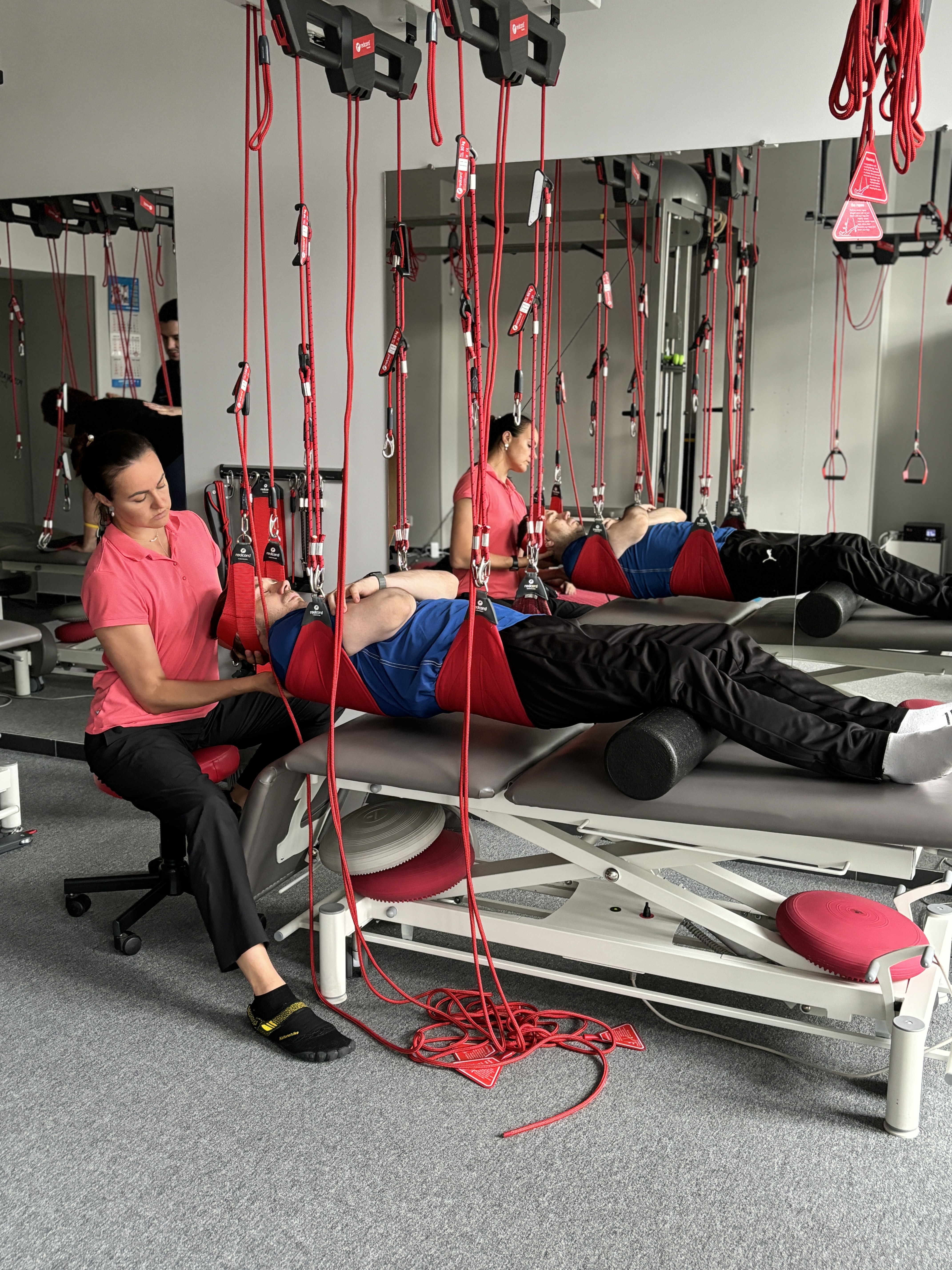
5. Relearning using the Neurac method
The Neurac method was scientifically developed to address pain without medication. Hundreds of studies confirm its effectiveness. The method is based on the neuroplasticity of the brain and retraining movement patterns of the body.
In our practice, we actively use the Neurac method with Redcord equipment and observe positive progress from the very first sessions.
A major advantage of this method is its clear protocols for assessment, therapy, and biomechanical adaptation. This allows long-term pain reduction and the selection of precise home exercises to maintain results.
Checklist: How to recognize that your pain has become neurogenic
Review your symptoms if standard rehabilitation after injuries or surgery is prolonged:
- Pain persists for more than 3 months, although doctors say tissues have fully healed.
- Discomfort increases with stress, poor sleep, fatigue, or emotional exhaustion.
- Pain becomes diffuse and often migrates (today the left shoulder hurts, tomorrow the neck).
- Normal touch or hot/cold stimuli cause a strong unpleasant response.
- Anti-inflammatory painkillers provide little or no relief.
FAQ
If the pain is in the brain, does that mean I am imagining it?
Absolutely not. The pain is completely real—you physically feel it. The source of this pain, however, is not an inflamed tendon or joint, but over-sensitive “wires” and receptors of the nervous system that transmit signals to the brain.
Can neuroplasticity be reversed and recovery achieved?
Yes. Neuroplasticity works both ways. Just as the brain learned pain, it can be retrained to feel safety. This requires regular, precise, and pain-free movement training under the supervision of a physiotherapist.
How long does “rewiring” the brain from chronic pain take?
This process takes longer than recovery from a typical injury. The first stable changes in nervous system sensitivity usually appear after 2–3 months of systematic and comprehensive work with a physiotherapist.