



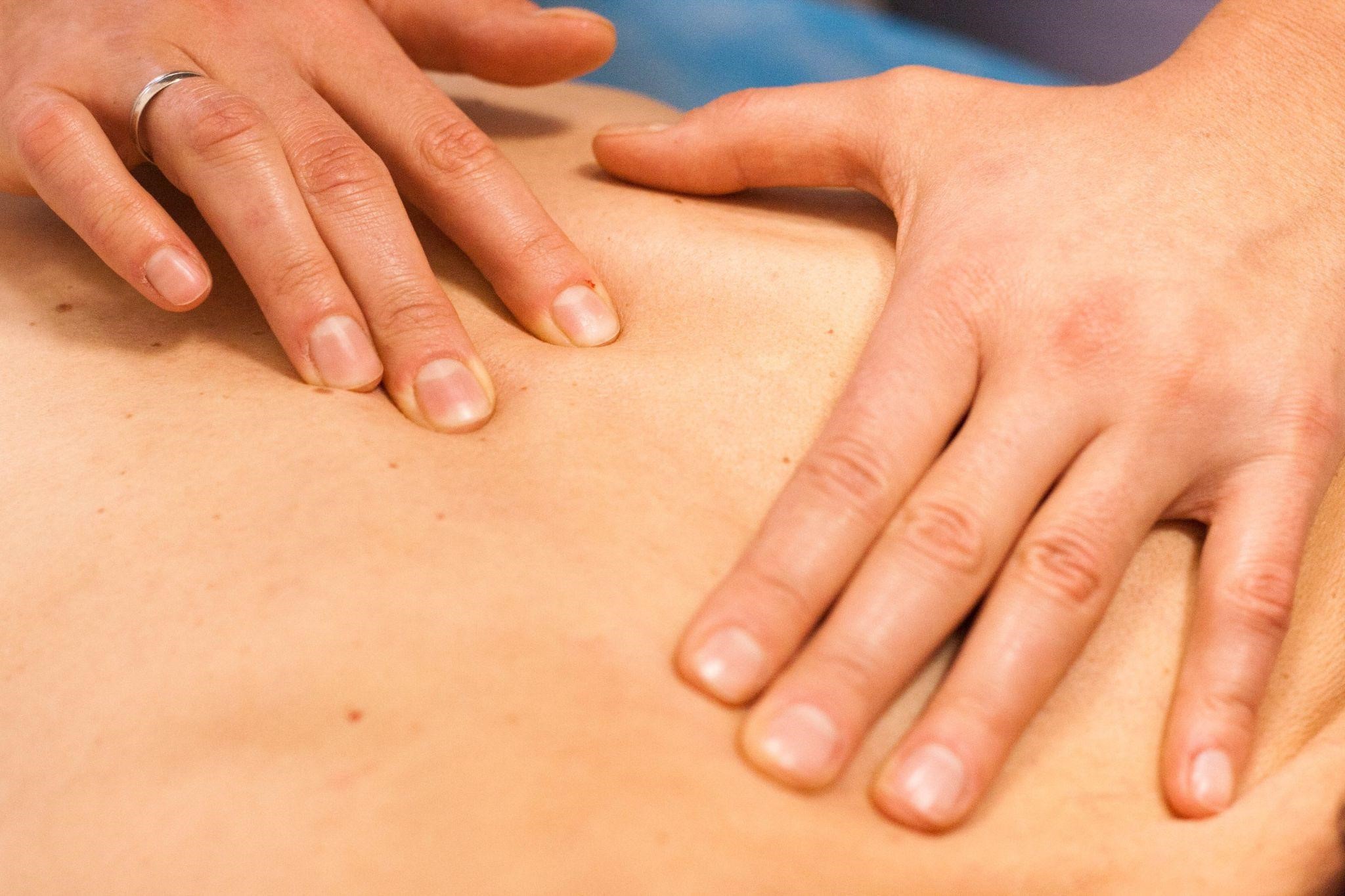
Do you recognize the feeling when a tight, painful “knot” appears in the shoulder or between the shoulder blades, reacting with a sharp shooting pain to any touch? In such situations, people usually immediately book a course of classical massage. However, just a few hours after the session, the exhausting muscle pain returns, forcing them to spend money again and again on procedures that provide only short-term relief.
This cycle happens because traditional rubbing of the skin and superficial muscles cannot eliminate the root cause of the discomfort. In this article, we will explore in detail how trigger points form, why ordinary massage is powerless against deep muscle tightness, and which evidence-based physiotherapy methods can restore your muscles’ health and elasticity.
What are trigger points and how do they form in muscles
From a biomechanical perspective, a trigger point is a localized area of hypersensitivity within a muscle fiber or its fascia (connective tissue sheath). When a muscle is under prolonged overload, certain microstructures (sarcomeres) become locked in a state of constant contraction. Due to this persistent spasm, capillaries are compressed, oxygen supply to the tissues is reduced, and local ischemia (oxygen deprivation) develops.
The nervous system immediately reacts to this process by sending a danger signal to the brain, which we perceive as strong pain in the neck, lower back, or joints. Most often, these areas develop due to:
- prolonged static work at a computer (sedentary work);
- incorrect technique during strength training or sudden lifting of heavy objects;
- compensatory patterns after surgeries or limb injuries;
- chronic emotional stress that provokes reflex protective muscle tension.
Why regular back massage provides only temporary relief
When a massage therapist works on a painful area, local blood circulation improves, tissues warm up, and endorphins are released into the bloodstream. This creates a pleasant illusion of recovery that disappears as soon as the muscle returns to its usual workload. A standard back massage only relaxes the superficial layer of tissues and cannot release the deep “locked” micro-nodule.
In addition, classical massage does not address the reason why the spasm originally formed. If the gluteal muscles are weak, the lower back becomes chronically overloaded, continuously forming new areas of tension. Without correcting this movement deficit, any passive treatment will provide only temporary pain relief.
Anatomy of the problem: active and latent spasm zones
In myofascial therapy, two main types of pathological nodules are distinguished, and they behave quite differently.
| Characteristic | Active trigger points | Latent trigger points |
| Symptoms | Painful even at rest, restrict movement. | Cause pain only during deep palpation (pressing). |
| Referred pain | Project pain to distant areas (e.g., a neck point causing migraine). | Do not cause pain elsewhere, but lead to chronic muscle weakness. |
| Effect on the body | Force changes in posture and gait, cause acute discomfort. | Subtly limit range of motion and accelerate joint wear. |
(According to research in orthopedics and myofascial therapy, up to 85% of cases of incorrectly diagnosed chronic joint pain are actually caused by referred pain from active trigger points in surrounding muscles.)
A comprehensive approach: how a physical therapist eliminates (treats) myofascial pain
To permanently eliminate muscle tightness, modern physical therapy uses targeted mechanical and neurophysiological methods to break the spasm pattern.
1. Ischemic compression and myofascial release (MFR)
A physiotherapist identifies the exact location of the trigger point and applies strong, sustained, and deep pressure using a finger or a specialized tool for 30–90 seconds. This temporarily blocks blood flow to the area. When the pressure is released, a strong surge of fresh arterial blood follows, which effectively flushes out metabolic waste and relaxes the contracted fibers.
2. Dry needling
One of the most effective evidence-based methods in modern rehabilitation. A thin acupuncture needle is inserted directly into the core of the trigger point. This provokes a local twitch response, after which the muscle fiber immediately and fully relaxes. The method allows access to the deepest muscles that are unreachable by manual massage.
3. Post-isometric relaxation (PIR)
This technique combines gentle, short-term muscle contraction against therapist resistance followed by stretching during a phase of complete relaxation. PIR allows for a painless increase in range of motion and reduces protective nervous system tone.
4. Smart therapeutic exercise
After the trigger points have been deactivated, movement must be restarted properly. The client is given therapeutic exercises aimed at strengthening weak antagonist muscles. This balances the load on the musculoskeletal system and removes the biomechanical cause of recurrent muscle spasm.
Checklist: How to prevent the recurrence of muscle tightness
Incorporate these simple habits into your daily routine to minimize the risk of muscle overload:
- Take an active 5-minute break every 45–60 minutes of sedentary work.
- Use an MFR roller for self-massage of major muscle groups after workouts and before training.
- Maintain proper hydration to support fascial tissue elasticity.
- Avoid prolonged static positions (e.g., holding a phone between ear and shoulder).
- Regularly perform mobility exercises for the spine and major joints.
FAQ
How to distinguish normal muscle soreness from a trigger point?
Muscle soreness (DOMS) is diffuse, appears after unusual load, and completely resolves within 2–4 days. A trigger point feels like a distinct painful “pea” or band that does not disappear for weeks.
Is dry needling safe and does it hurt?
The procedure is performed with sterile single-use needles and is safe under the supervision of a certified physiotherapist. The moment of reaching the trigger point feels like a brief deep cramp or pressure, followed by immediate relief.
How many sessions are needed to remove trigger points?
Single fresh trigger points can often be resolved in 1–3 myofascial therapy sessions. If chronic pain has been present for years, full restoration of movement patterns and muscle function may require 10–20 comprehensive sessions.
Are there gentle, pain-free techniques to treat pain and trigger points?
One of the gentlest approaches in terms of body and nervous system impact is inhibition. This technique allows a gentle, pain-free reset of the muscle and helps restore its normal function.