



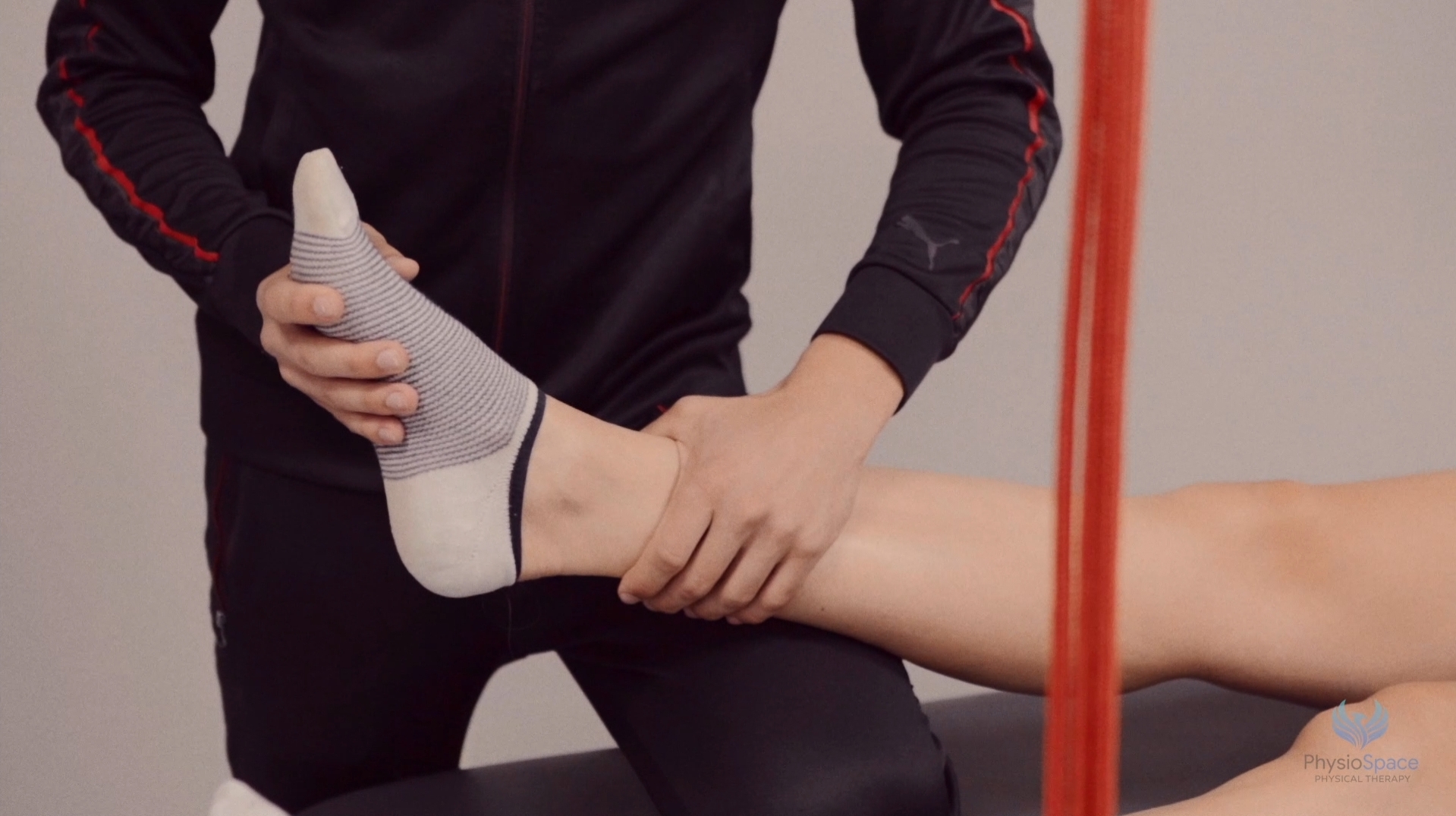
You twisted your ankle while running, landed awkwardly during a basketball game, or simply misstepped on the sidewalk—and suddenly your joint begins to swell, and every step causes severe joint pain. Ligament injuries are among the most common reasons people seek help from trauma specialists and rehabilitation professionals. Many believe that a few days of rest at home with some topical ointment is all it takes for the problem to resolve on its own.
However, when an injured tendon or ligament is left to heal without proper care, the tissue repairs itself in a disorganized way, often leading to chronic joint instability and repeated sprains. In this article, we explain what proper ligament sprain rehabilitation should look like, which recovery stages should never be skipped, and why complete rest is no longer considered the best treatment.
Why outdated methods can be harmful: the modern view of ligament injuries
For decades, the standard treatment for ligament injuries was the RICE protocol (Rest, Ice, Compression, Elevation). Patients were often placed in plaster casts or rigid braces for extended periods, completely immobilizing the injured limb. Modern evidence-based physical therapy has challenged this approach, demonstrating that prolonged immobilization weakens muscles and slows collagen fiber regeneration.
A ligament should heal under conditions of appropriate, progressive mechanical loading. Movement stimulates the proper alignment of newly formed collagen fibers, making the tissue stronger and more flexible. Effective injury rehabilitation is based on early mobilization, which helps protect the joint from stiffness and the surrounding muscles from atrophy.
Clinical grades of ligament injury and expected recovery times
Before creating a rehabilitation program, a physical therapist evaluates the severity of the injury. This assessment directly determines the expected duration of physical therapy.
| Injury Grade | What Happens to the Ligament | Estimated Recovery Time |
| Grade I (Mild) | Microscopic tears of the fibers; ligament remains intact. Mild swelling and moderate pain. | 1–3 weeks |
| Grade II (Moderate) | Partial ligament tear. Significant swelling, bruising, and restricted movement. | 4–8 weeks |
| Grade III (Severe) | Complete ligament rupture. Joint instability and severe acute pain. | 3–6 months (sometimes following surgery) |
(According to recommendations published by the British Journal of Sports Medicine (BJSM), proper functional rehabilitation for Grade I and II injuries allows patients to return to activity up to 30% faster than traditional cast immobilization.)
Step-by-step rehabilitation after a ligament sprain: the PEACE & LOVE protocol
The current gold standard for rehabilitation is the internationally recognized PEACE & LOVE protocol, which divides recovery into two logical phases.
Phase 1 (PEACE): The first days after injury—protection and unloading
- P (Protect): Limit movements that cause sharp pain during the first 1–3 days to reduce the risk of further tissue damage.
- E (Elevate): Keep the injured limb elevated above heart level to promote natural lymphatic drainage and reduce swelling.
- A (Avoid anti-inflammatory modalities): Avoid excessive use of ibuprofen and ice. Inflammation is a natural part of the healing process, and completely suppressing it may slow tissue regeneration.
- C (Compress): Use an elastic bandage or light brace to help control internal tissue swelling.
- E (Educate): Listen to your body and avoid unnecessary passive treatments. An active rehabilitation approach is consistently more effective.
Phase 2 (LOVE): Active recovery and controlled movement
- L (Load): Once acute pain subsides, begin gently bearing weight on the injured leg or using the injured arm. Loading should remain pain-free.
- O (Optimism): Maintain a positive mindset. The brain and nervous system directly influence pain perception and recovery outcomes.
- V (Vascularization): Perform cardiovascular exercises that do not stress the injured area (such as arm cycling or swimming) to improve circulation and stimulate metabolism.
- E (Exercise): Begin performing specific therapeutic exercises to restore mobility, strength, and coordination.
How does a physical therapist restore joint stability?
After a ligament sprain, proprioception—the brain’s ability to sense joint position—is significantly impaired. Ligaments contain thousands of tiny sensory receptors that are damaged during injury. Without retraining these receptors, the brain may fail to respond quickly enough the next time you lose your balance, increasing the risk of another injury.
An experienced physical therapist designs a rehabilitation program focused on balance boards, unstable surfaces (such as BOSU trainers), closed-eye balance exercises, and suspension training systems. These methods retrain the nervous system to stabilize the joint using the surrounding muscles. Passive techniques, including kinesiology taping and gentle manual release, are used only as supportive tools to reduce discomfort.
Checklist: How to know you’re ready to return to full physical activity
Before returning to running, jumping, or lifting weights, you should confidently meet all of the following criteria:
- No joint pain during normal daily walking or everyday activities.
- The injured limb has regained 100% of the range of motion compared to the healthy side.
- The muscles surrounding the joint have fully regained their strength (for example, you can confidently stand on one leg).
- You can perform simple functional tests, such as hopping on one leg, without fear or discomfort.
- You have received official clearance from your rehabilitation specialist.
FAQ
Do I need an MRI for every ligament sprain?
Not necessarily. For Grade I and Grade II injuries, clinical examination and functional testing are often sufficient for a physical therapist. MRI is typically recommended if a complete ligament rupture (Grade III), joint locking, or a lack of improvement after two weeks of active rehabilitation is suspected.
What should I do if my joint remains swollen even after a month?
Mild residual swelling after prolonged activity may persist for several months while the vascular system continues to remodel. However, if swelling is accompanied by pain and limited movement, you should consult a specialist to adjust your rehabilitation program.
How does kinesiology taping help after a ligament sprain?
Kinesiology tape cannot mechanically stabilize a joint like a rigid brace. Instead, it works by stimulating skin receptors, improving lymphatic drainage (thereby reducing swelling), and providing additional sensory input that helps the nervous system better control joint stability.
Are there techniques that allow you to safely begin active movement earlier?
Training with the Redcord suspension system allows patients to begin active rehabilitation safely at an earlier stage. Redcord uses off-axis body positions and unloads the body with the help of elastic suspension cords, allowing active, pain-free movement while reducing stress on the injured tissues.