



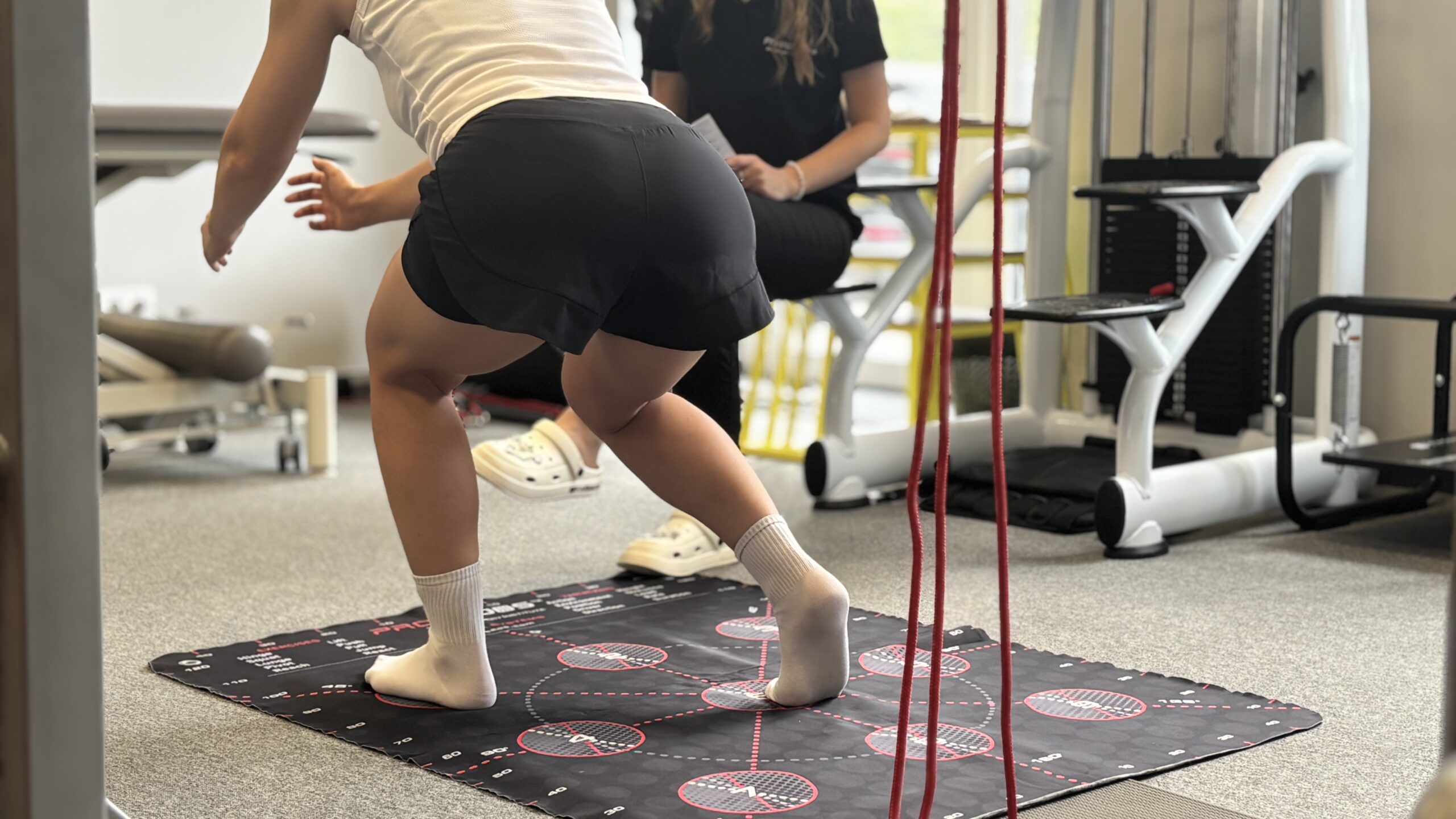
Sharp or aching buttock pain can significantly limit your daily activities — from ordinary walking and sitting to workouts or physically demanding duties. Discomfort in this area can also radiate into the leg, thigh, or lower back, interfering with everyday life and sleep.
Trying to suppress the symptoms with painkillers may provide temporary relief but does not address the underlying cause. Physical therapy offers an evidence-based approach: assessing movement biomechanics and restoring the function of muscles and joints without relying on medication.
Common Causes of Buttock Pain
The anatomy of the buttock region is complex. It contains large muscle groups, ligaments, joints, and major nerve structures. Dysfunction in any of these structures can contribute to pain or discomfort.
Piriformis Syndrome and Sciatic Nerve Irritation
An irritated or overloaded piriformis muscle can contribute to irritation or compression of the sciatic nerve. This may cause sharp or burning sciatic nerve pain that can radiate along the back of the thigh and, in some cases, as far as the foot.
Sacroiliac Joint Dysfunction and Lower Back Conditions
Problems involving the sacroiliac (SI) joint, as well as disc herniations or other conditions affecting the lumbar spine, can sometimes mimic localized muscular pain. Altered load distribution through the pelvis may contribute to persistent overloading of the buttock region.
Gluteal Tendinopathy and the Effects of a Sedentary Lifestyle
Prolonged sitting can contribute to reduced gluteal muscle activity and decreased physical capacity. When activity levels suddenly increase, the gluteal tendons may become overloaded. Why do athletes experience buttock pain? One possible cause is repetitive tendon loading during running, squatting, or other demanding activities.
Initial Self-Assessment: When Should You See a Physical Therapist?
To develop an effective rehabilitation strategy, it is important to distinguish between musculoskeletal problems and symptoms that may originate from the lumbar spine or involve nerve irritation.
Comparing Symptoms by Their Possible Source
| Criterion | Piriformis Syndrome | Lumbar Disc Herniation | Gluteal Tendinopathy |
| Pain Characteristics | Deep, localized, burning | Shooting, “electric,” or radiating | Aching, localized, aggravated by activity |
| Radiation | May extend toward the knee along the back of the thigh | May extend below the knee into the foot and toes | Usually remains localized to the buttock and rarely radiates |
| Aggravating Factors | Prolonged sitting, certain hip or pelvic movements | Bending, coughing, sneezing | Walking upstairs, lying on the affected side |
Modern Recovery Methods Without Medication or Surgery
Effective physical therapy for buttock pain focuses on identifying contributing factors, improving movement, restoring tissue capacity, and strengthening the muscles that support the pelvis and hip.
Note: Clinical guidelines, including recommendations from the American College of Physicians (ACP), support non-pharmacological approaches such as exercise and other conservative treatments as important first-line options for many types of musculoskeletal low back and pelvic pain.
Manual Techniques and Myofascial Release
Gentle manual techniques, trigger-point massage, and self-myofascial release using a massage ball or foam roller may help temporarily reduce muscle tension and improve comfort in the affected area.
Therapeutic Exercises to Restore Balance and Strength
Appropriately selected exercises for buttock pain can help restore normal movement patterns and improve strength. The key principle is to increase the load gradually without pushing through sharp or significantly worsening pain.
Activity Modification and Workplace Ergonomics
Adjusting chair height, using an appropriate cushion when needed, and taking regular movement breaks during work or physically demanding duties can help reduce prolonged static loading of the pelvic region.
An Effective Exercise Routine for Reducing Discomfort
Perform this basic routine gently, maintaining steady breathing and avoiding sudden movements.
Step-by-Step Basic Exercise Protocol
| Exercise | Goal | Dosage |
| 1. Gluteal self-myofascial release with a massage ball (gently rolling over areas of tension) | Reduce muscle tension and trigger points | 1–2 minutes on each side |
| 2. Lying piriformis stretch | Reduce tension around the deep gluteal region | 3 sets of 30 seconds |
| 3. Double-leg glute bridge (focus on pressing the feet into the floor) | Activate the gluteus maximus | 2–3 sets of 10–12 repetitions |
| 4. Side-lying “Clamshell” | Strengthen the gluteus medius | 2 sets of 12–15 repetitions |
Red Flags: When You Need Immediate Medical Attention
Physical therapy is generally safe, but certain symptoms require urgent medical assessment:
- Numbness in the groin or perineal area (“saddle anesthesia”).
- Loss of bladder or bowel control or significant difficulty urinating.
- Sudden weakness in the foot, such as the foot dropping or dragging while walking.
- Fever occurring together with severe or acute pain.
- Pain that develops after a high-energy injury, such as a significant fall or motor vehicle accident.
FAQ
Can You Apply Heat to Buttock Pain?
After an acute injury, excessive heat during the first 48–72 hours may potentially increase swelling or discomfort in some cases. If the pain is primarily muscular and there is no acute injury or significant swelling, gentle warmth may provide temporary relief. Stop if heat makes your symptoms worse.
How Long Does Physical Therapy Rehabilitation Take?
Some people notice improvement within the first few sessions when therapy is combined with regular home exercises. However, the time required to fully restore strength and function varies depending on the underlying cause, severity, and duration of symptoms. A rehabilitation program may take several weeks or longer.
How Can You Prevent Buttock Pain From Returning During Sedentary Work or Physical Activity?
Take short movement breaks every 45 minutes of sitting, regularly perform exercises that strengthen the core and pelvic muscles, and always include an appropriate warm-up before strength training or running.