



Achilles tendon rupture, also known as Achilles tendon tear, is accompanied by severe pain and impaired mobility.
Rehabilitation after an Achilles tendon rupture plays a crucial role in recovery and returning to normal activity.
Below is a general rehabilitation plan for an Achilles tendon rupture.
1. Postoperative Period
The first step in rehabilitation for an Achilles tendon rupture may involve surgery to repair the tendon or immobilization using a cast or brace.
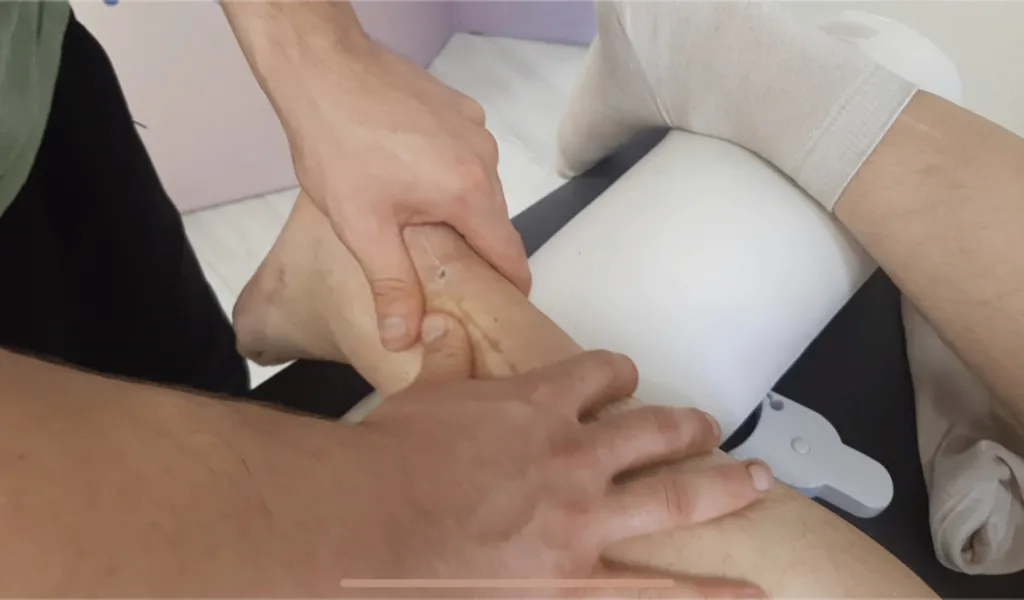
During this period, the main goal is to prevent excessive stress on the tendon and allow it to heal. Gentle scar tissue and surrounding tissue work is most beneficial during this phase.
2. Physical Therapy
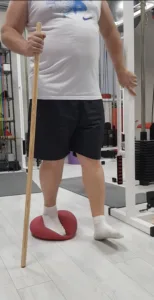
Physical therapy is crucial for restoring function to the Achilles tendon and leg muscles. A physical therapist develops an individualized rehabilitation program that includes scar tissue mobilization (breaking it up), soft tissue mobilization, ankle-foot joint mobilization, therapeutic exercises aimed at restoring muscle function, improving their strength, flexibility, and endurance, as well as exercises for coordination and balance.
A comprehensive approach includes manual techniques, massage techniques, percussion massage, kinesiotaping, flossing, and others.
3. Loading
Loading is gradually increased on the injured Achilles tendon and muscles, depending on readiness. It is necessary to start with lightweight exercises (without weight on the limb), passive or passive-active exercises, and gradually progress to more intensive ones. This process should be controlled and supervised by a specialist.
During the exercises, our experts assess:
- Range of motion and mobility in the joint
- Muscle strength
- Level of pain sensation
- Optimal starting position for exercises
- Correct level of loading
- Need for additional equipment
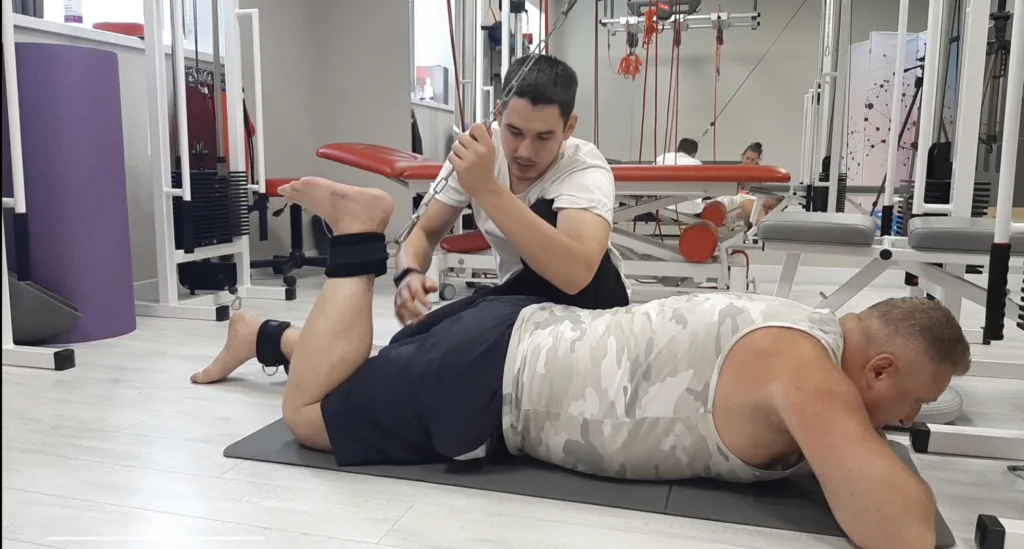
During the recovery process, specific goals and timelines are established, and tasks are tailored for each period.
We always select a set of therapeutic exercises for our clients to do at home. We record these exercises on video with detailed explanations of the technique, taking into account the individual characteristics of your case.
4. Using an Orthosis for Achilles Tendon Rupture
In some cases, a doctor may recommend using an orthosis or heel support for additional protection of the tendon during rehabilitation sessions and daily activities.
5. Return to Work and Activities
Returning to normal physical activities and work may take time. Typically, this process is divided into several phases, starting from returning to regular movement activities and ending with returning to sports training and competitions. This path is individual for each person.
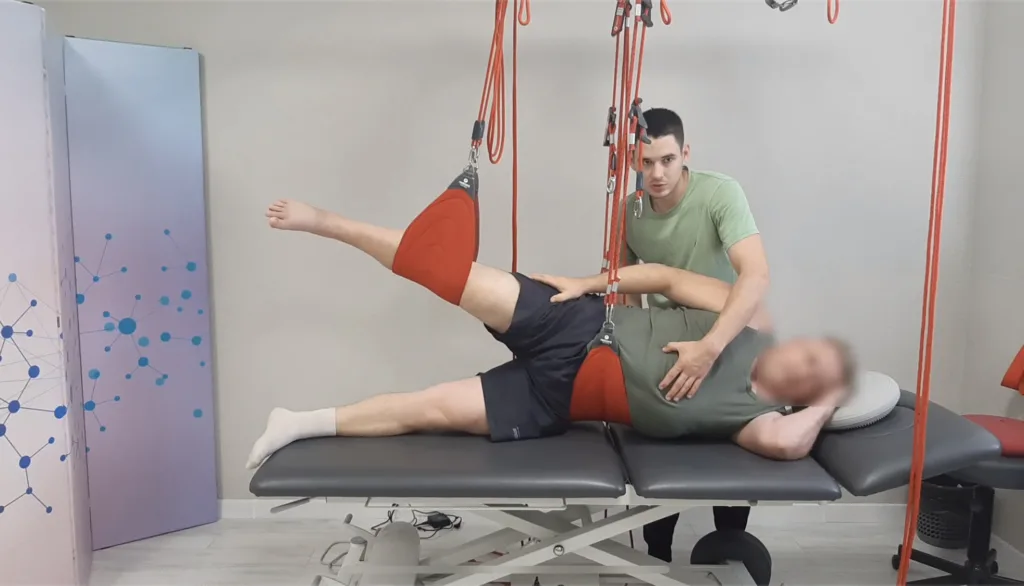
In our work, we rely on the results of diagnostics using Redcord equipment. By analyzing body biomechanics, work movement patterns, possible surgeries, and past injuries, we conduct diagnostics to identify weak links in the body.
A weak muscle group can cause significant muscle imbalance in the body and lead to complex musculoskeletal injuries. That’s why we assess the condition of the entire body and comprehensively address your needs.
6. Pain and Inflammation Relief
Treatment and rehabilitation may also include the use of anti-inflammatory medications or physical methods to reduce pain and inflammation.
In our practice, we prefer non-pharmacological interventions. We rely on therapeutic exercises and additional bodywork techniques that engage the body’s natural ability to heal. In cases where necessary, we incorporate physiotherapy procedures.
7. Psychological Support
Rehabilitation after an Achilles tendon rupture can be physically and psychologically challenging. The process of restoring walking abilities takes time, and there may be fear that the repaired Achilles tendon could rupture again, leading to poor confidence in one’s movements.
Psychological support, or psychotherapy, can help patients overcome stress and anxiety, thereby speeding up and improving the quality of the recovery process. Professionals such as psychologists can be helpful if collaboration with a physical therapist alone is insufficient.
Rehabilitation after an Achilles tendon rupture is a process that requires time and patience. It is important to follow the recommendations of specialists and gradually return to normal activity to avoid recurrences and further complications.
Call us, and together we will achieve your goal in the shortest possible time.
Below is the video story of our client’s recovery journey, illustrating how he overcame this path!💪