



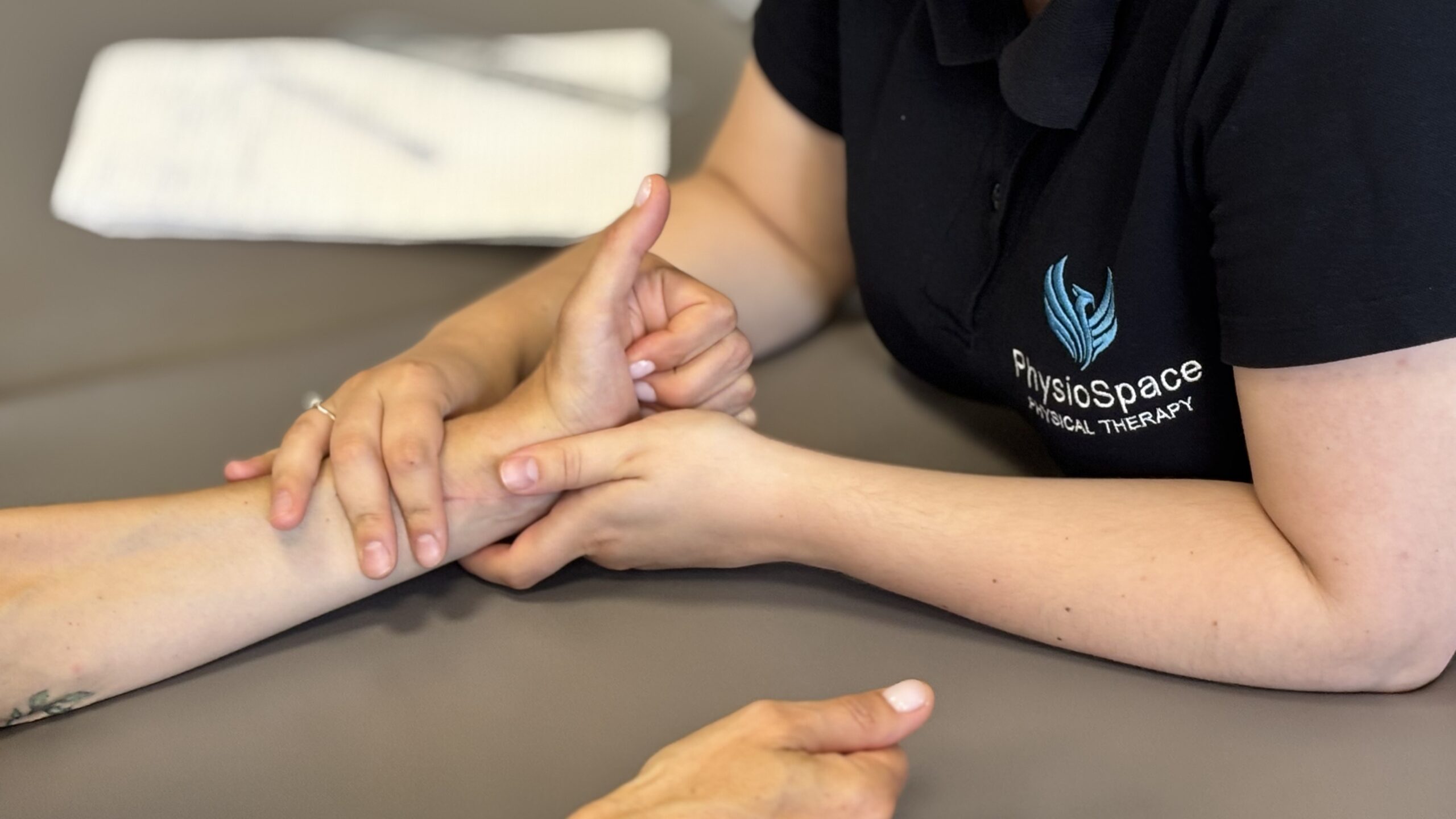
Nighttime numbness in the thumb, index, and middle fingers, a burning sensation in the palm, and a constant urge to stretch and move your hand are classic signals that your hand is asking for help. If you are finding it difficult to hold a cup, drive a car, or type on a keyboard, the most likely cause is carpal tunnel syndrome.
There is no need to wait until the pain becomes unbearable or muscle atrophy develops. Timely physical therapy for carpal tunnel syndrome can help stop the inflammatory process, relieve pressure on the nerve, and restore full hand function without surgery.
What Is Carpal Tunnel Syndrome and How Does It Develop?
The carpal tunnel is a narrow anatomical passageway in the wrist formed by bones and a strong ligament. The tendons of the finger flexor muscles and the median nerve pass through it. The median nerve is responsible for sensation in much of the palm and fingers.
Anatomy: Compression of the Median Nerve
When tissues inside the tunnel become swollen or thickened as a result of repetitive movements or inflammation, the available space becomes narrower. This leads to compression of the median nerve, which can impair its blood supply and the transmission of nerve impulses.
Key Symptoms You Should Not Ignore
- Numbness in the fingers (especially the thumb, index, and middle fingers).
- Nighttime wrist and hand pain that causes you to wake up and shake or move your hand.
- A tingling, “pins and needles,” or burning sensation in the palm.
- Reduced grip strength: objects may slip from your hands, and it may become difficult to fasten buttons or turn a key.
Who Is at Risk?
People whose activities involve repetitive or prolonged stress on the hands and wrists are at increased risk:
- Office workers and IT professionals (prolonged use of a mouse and keyboard).
- Military personnel and veterans (consequences of repetitive microtrauma, prolonged weapon handling, and use of heavy equipment).
- Athletes (CrossFit, weightlifting, cycling, tennis).
- Older adults and people recovering from wrist injuries.
Stages of Development and Comparison of Recovery Methods
In the early and moderate stages of the condition, conservative hand rehabilitation can be highly effective and may provide outcomes comparable to surgery, without the risks associated with postoperative complications.
Comparison: Conservative Physical Therapy vs. Surgical Intervention
| Parameter | Conservative Physical Therapy | Surgery (Decompression) |
| Indications | Mild to moderate carpal tunnel syndrome | Severe stage, persistent muscle atrophy |
| Recovery Time | 4–8 weeks without significant disruption to daily activities | 2–6 months of rehabilitation following the incision |
| Risks | Minimal, as the procedures are non-invasive | Infection, scarring, prolonged pain |
| Primary Outcome | Reduction of swelling-related compression and prevention of recurrence | Mechanical release of the ligament |
(According to clinical research published in the Journal of Orthopaedic & Sports Physical Therapy, conservative therapy reduces the need for surgery in more than 70% of patients.)
How Physical Therapy Helps Treat Carpal Tunnel Syndrome
A physical therapist develops an individualized recovery plan based on the source of nerve compression and the stage of the inflammatory process.
Neurodynamics (Median Nerve Mobilization)
Specific gentle exercises allow the nerve to move and “glide” freely within the anatomical tunnel. This can improve its blood supply and help restore normal nerve impulse conduction.
Myofascial Release and Soft Tissue Techniques
Manual therapy techniques address trigger points and soft tissue restrictions in the forearm, shoulder, and neck and upper shoulder region. This can reduce excessive muscle tension that may contribute to increased compression.
Exercises for Carpal Tunnel Syndrome
Once acute pain has subsided, isometric and functional exercises for carpal tunnel syndrome are introduced. They help restore grip strength, tendon flexibility, and fine motor control of the fingers.
Wrist Bracing and Nighttime Support
Using a specialized wrist brace (orthosis) to keep the wrist in a neutral position during sleep helps prevent excessive wrist flexion and reduces nighttime pressure on the median nerve.
Prevention and Workplace Ergonomics
Proper organization of daily activities is an effective form of carpal tunnel syndrome prevention.
Ergonomics and Daily Wrist Protection Checklist
| Area to Monitor | Recommended Action |
| Workstation | Use a vertical mouse and a gel wrist rest. |
| Arm Position | Keep the elbows at approximately a 90-degree angle; the wrists should remain in a neutral position without excessive bending. |
| Breaks | Every 45–60 minutes, take a 3-minute break to perform gentle forearm stretches. |
| Load | Avoid excessive gripping of tools, sports equipment, or weapons. |
FAQ
Can Carpal Tunnel Syndrome Be Treated With Exercises Alone?
Yes, if treatment is started at an early or moderate stage. Comprehensive physical therapy combined with ergonomic modifications can significantly reduce or eliminate symptoms in many cases.
How Long Does a Course of Physical Therapy Take?
Initial relief may occur within 1–2 weeks of regular treatment. A full rehabilitation program typically lasts 4–8 weeks.
When Is a Specialist Consultation Necessary?
A specialist consultation is recommended if there is persistent loss of sensation, significant atrophy of the muscles at the base of the thumb, or no improvement after 8 weeks of conservative treatment.
Conclusion
Numbness in the fingers and hand pain are not simply signs of fatigue but may indicate compression of nerve structures. Timely physical therapy for carpal tunnel syndrome can help restore comfortable movement without surgery or the need for medication. Consult a qualified physical therapist to develop an individualized rehabilitation program and protect the long-term health and function of your hands.