



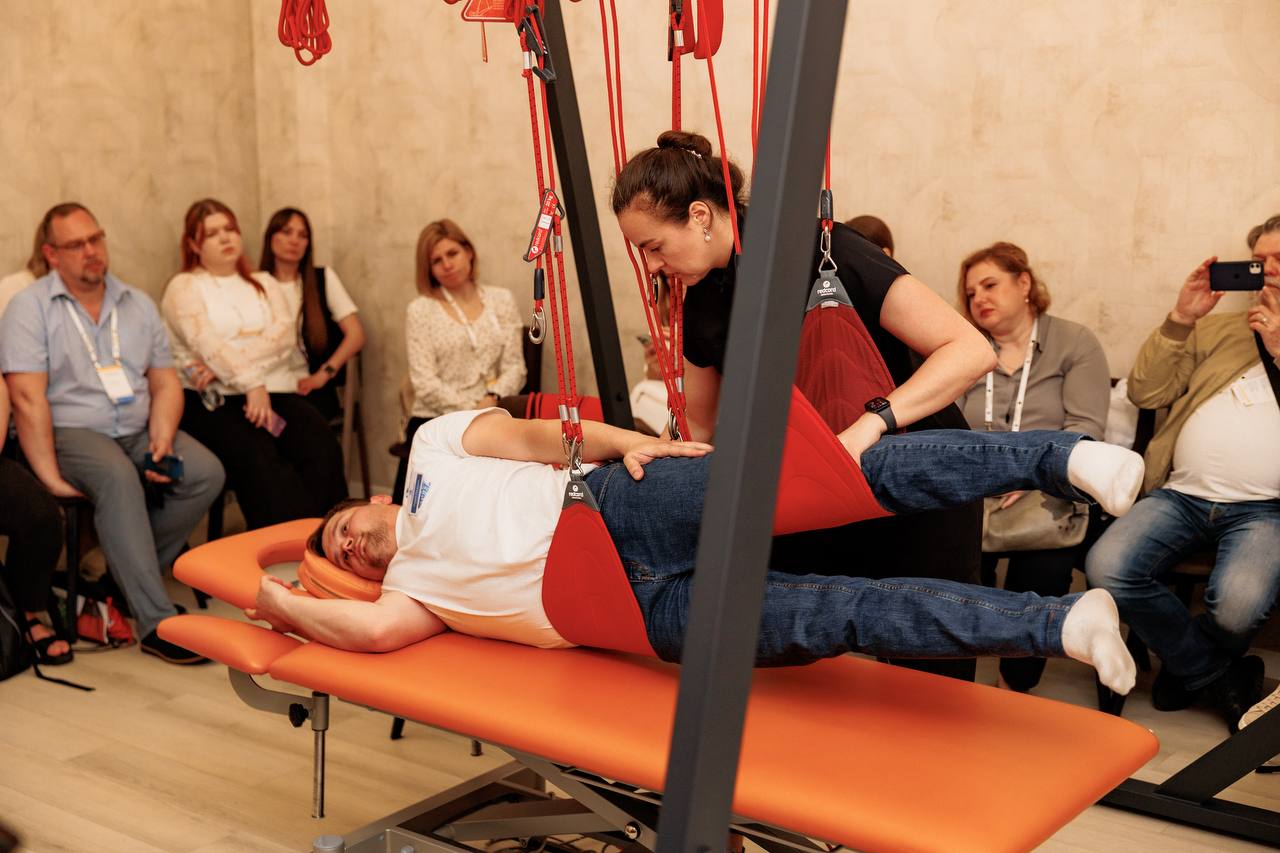
Low back pain that radiates into the leg is one of the most common reasons for visiting a physical therapist, neurologist, or orthopaedic specialist. For some people it feels like mild discomfort in the gluteal region, while for others it can be a sharp “shooting” pain, numbness, or even weakness in the leg.
Many people immediately think about a disc herniation or surgery. However, in reality, there can be several causes of this type of pain, and the situation is not always critical.
In this article we will cover:
- why low back pain radiates into the leg
- which symptoms should not be ignored
- what to do in such a condition
- when to see a physical therapist
Why low back pain radiates into the leg
Most often, the cause is related to irritation or compression of neural structures in the lumbar spine.
Nerves that exit the lower back:
- pass through the gluteal region
- travel down the leg
- are responsible for sensation and movement
If a nerve becomes irritated, pain can spread along its entire “pathway”.
Main causes of this type of pain
1. Disc protrusion or herniation
The most well-known cause.
When a disc:
- bulges
- or compresses a nerve
the following symptoms may appear:
- low back pain
- gluteal pain
- pain radiating into the leg
Sometimes this is accompanied by:
- tingling
- numbness
- weakness
2. Sciatica (sciatic nerve irritation)
The sciatic nerve is the largest nerve in the body.
When it is irritated, pain:
- “shoots” from the lower back downward
- may reach the foot
- is aggravated by sitting or bending
3. Muscle spasm
Tight muscles in the gluteal or lumbar region can also:
- compress nerves
- mimic symptoms of a herniated disc
4. Lumbar instability
When deep stabilising muscles do not function properly:
- load distribution becomes inefficient
- tissue irritation increases
5. Overload or injury
A sudden movement, lifting heavy weight, or unusual load can:
- trigger inflammation
- cause pain radiating into the leg
How to understand if the problem is serious
There are symptoms that require professional attention.
You should see a doctor or physical therapist if:
- pain radiates below the knee
- there is numbness
- weakness appears in the leg
- walking becomes difficult
- pain lasts more than a few days
- symptoms are worsening
Dangerous symptoms (“red flags”)
Seek immediate medical attention if:
- there are bladder or bowel control problems
- sudden severe leg weakness occurs
- loss of sensation in the groin area
- severe pain after trauma
These symptoms are rare but require urgent evaluation.
What NOT to do
With radiating low back pain, people often make common mistakes.
❌ Complete rest
Lying in bed for several days is a bad idea.
It:
- weakens muscles
- reduces blood circulation
- delays recovery
❌ Enduring pain for months
The longer the problem persists:
- the higher the risk of chronic pain
- the more difficult the recovery
❌ Doing random YouTube exercises
Not all exercises are appropriate for:
- disc herniation
- nerve irritation
- acute pain
Incorrect loading may worsen the condition.
❌ Constant use of painkillers
Medication:
- masks the symptom
- but does not solve the underlying problem
What to do if pain radiates into the leg
1. Do not panic
Even if an MRI shows a herniation, it does not automatically mean surgery is required.
In most cases, the condition can be treated conservatively.
2. Maintain moderate activity
Movement is necessary, but without overload.
Helpful:
- walking
- changing positions
- avoiding prolonged sitting
3. Get an assessment from a specialist
It is important to understand:
- which structure is causing the pain
- whether there is nerve irritation
- which movements trigger symptoms
4. Start physical therapy
This is the main modern treatment approach.
Physical therapy helps to:
- reduce pain
- relieve nerve compression
- restore mobility
- strengthen stabilising muscles
How treatment is carried out
The program depends on the cause, but usually includes:
Exercises
For:
- lumbar stabilisation
- activation of deep muscles
- improved nerve mobility
Muscle work
To:
- reduce spasm
- improve mobility
Load correction
Patients are taught:
- how to sit properly
- how to bend
- how to lift objects without pain
Gradual return to activity
The goal is not only to eliminate symptoms, but to restore normal life.
Is MRI necessary?
Not always.
MRI is usually recommended if:
- symptoms are severe
- there is weakness
- pain persists for a long time
- additional treatment is being considered
Important:
the presence of a herniated disc on MRI does not always mean it is the actual source of pain.
How long recovery takes
On average:
- acute pain — 2–6 weeks
- full recovery — several months
It depends on:
- the underlying cause
- lifestyle
- consistency of rehabilitation
How to prevent recurrence
After improvement it is important to:
- strengthen core muscles
- stay active
- avoid prolonged sitting
- control load management
- perform exercises regularly
Conclusion
Low back pain radiating into the leg is a symptom that should not be ignored. It is most often associated with irritation of neural structures, muscular imbalance, or intervertebral disc problems.
In most cases, the problem can be effectively managed without surgery using modern physical therapy approaches.
The key is not to self-medicate and not to wait until the pain becomes chronic.
The earlier proper rehabilitation begins, the faster and more stable the recovery will be.