



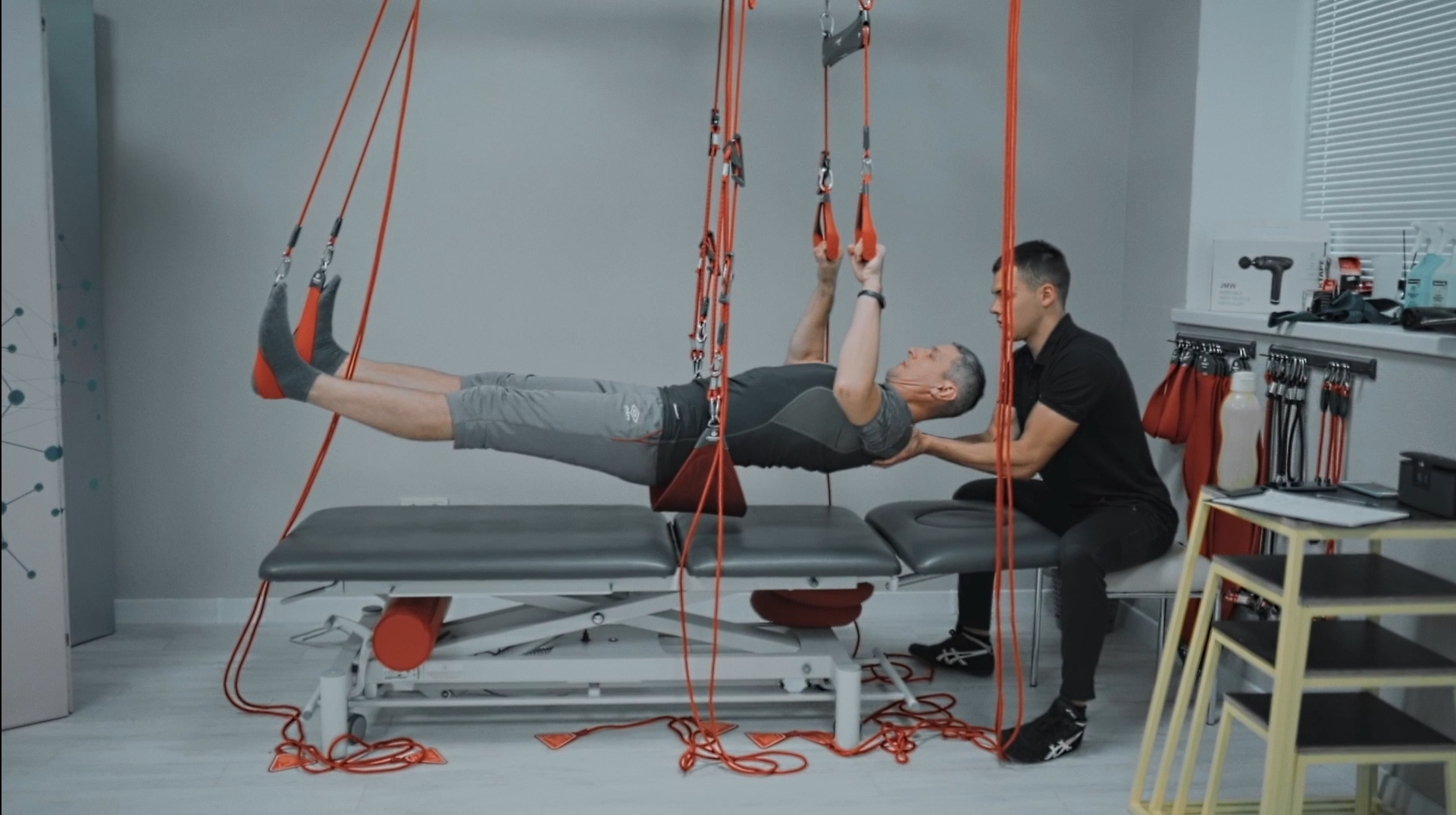
Sports injuries are not limited to professional athletes. Muscle strains, knee pain, shoulder problems, or lower back issues often occur in people who go to the gym, run, or simply lead an active lifestyle.
The most common mistake after an injury is either complete rest “until the pain is gone” or, on the contrary, returning to training too quickly. Both approaches can lead to re-injury or chronic pain.
In this article, we will cover:
- how rehabilitation after sports injuries works
- when you can return to training
- what stages of recovery exist
- how to avoid re-injury
What is rehabilitation after a sports injury
Rehabilitation is the process of restoring:
- movement
- strength
- stability
- body control
After an injury, the goal is not only to eliminate pain but to restore normal tissue function and movement patterns.
Most common sports injuries
- muscle and ligament strains
- knee injuries (meniscus, ligaments)
- shoulder injuries
- ankle injuries
- lower back pain after overload
Why you should not rush returning to sport
If you return to training too early:
- tissues are not fully healed yet
- muscles are still weak
- motor coordination is impaired
This significantly increases the risk of:
- re-injury
- chronic pain
- longer recovery time
Main stages of rehabilitation
1. Acute phase (pain and inflammation reduction)
During this stage:
- load is reduced
- pain is managed
- light mobility is maintained
❗ Complete rest is used only briefly and only if necessary.
2. Restoration of mobility
The goal:
- restore normal range of motion
- reduce stiffness
Methods include:
- light exercises
- joint mobilization
- controlled movements
3. Strength restoration
At this stage it is important to:
- strengthen muscles
- restore load balance
Especially important:
- joint stabilizers
- deep core muscles
- muscles weakened by injury
4. Restoration of control and coordination
This is a critical stage.
It includes:
- balance training
- coordination exercises
- movement control
5. Return to sport
Gradual increase in load:
- light training
- sport-specific movements
- full return to training
When can you return to training
Return is based not only on pain absence but on function:
You can return if:
- no pain during movement
- full range of motion is restored
- strength is nearly symmetrical
- no swelling or instability
- movements are performed without compensation
What NOT to do after an injury
❌ Returning to sport “through pain”
Pain is a signal that tissues are not ready yet.
❌ Prolonged complete bed rest
This leads to:
- loss of strength
- reduced endurance
- impaired movement control
❌ Ignoring rehabilitation
Without rehabilitation, the risk of re-injury is significantly higher.
❌ Copying someone else’s training program
Every injury and every body is individual.
How physiotherapy helps after sports injuries
1. Movement and injury assessment
A physical therapist evaluates:
- why the injury occurred
- which muscles are weak
- which movements are risky
2. Individual rehabilitation program
Exercises are tailored based on:
- type of injury
- pain level
- athlete’s goals
3. Progressive loading
Principle: from simple to complex.
4. Restoration of biomechanics
It is important not only to heal tissues but also to:
- restore correct movement patterns
- eliminate compensations
5. Prevention of re-injury
Patients are taught:
- how to train without overload
- how to control technique
- how to recognize early symptoms
Recovery time
Depends on the injury:
- mild strains — 2–4 weeks
- moderate injuries — 4–8 weeks
- severe injuries — several months
How to prevent re-injury
- do not ignore early symptoms
- strengthen muscles regularly
- warm up before training
- control technique
- increase load gradually
Conclusion
Rehabilitation after a sports injury is not just rest, but a systematic process of restoring movement, strength, and control.
Proper approach allows you to:
- return safely to training
- reduce risk of re-injury
- improve athletic performance
The key rule: return to sport should be not fast, but correct.