



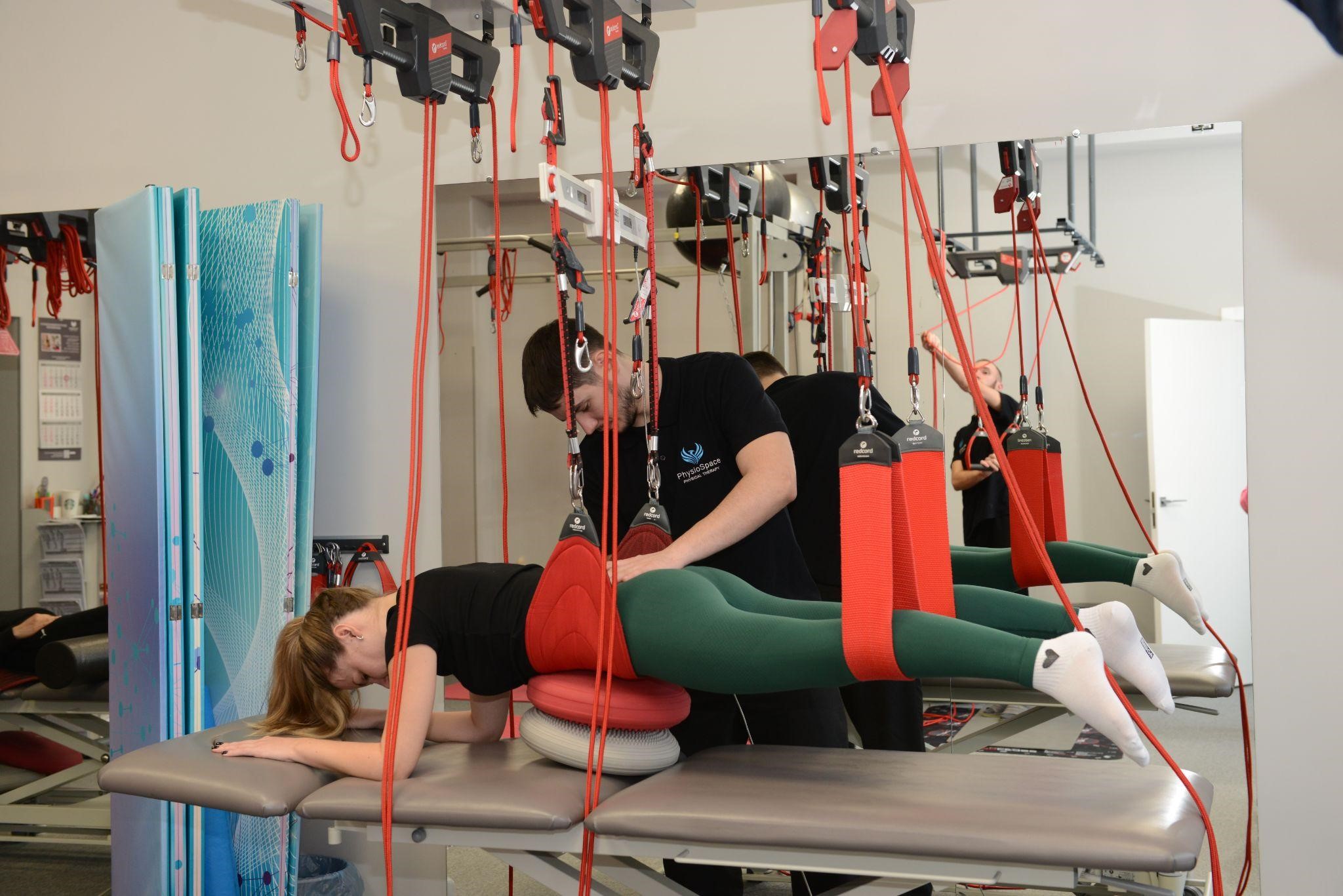
Integration of modern methods and technologies into physical therapy
Modern physical therapy is actively implementing new techniques and equipment that enhance the effectiveness of recovery. Two prominent technologies that have enriched the arsenal of physical therapists in recent decades are the Redcord system (Neurac protocol) and the Bubnovsky multifunctional simulator (MTB) . Both approaches are aimed at working with the musculoskeletal system in the format of kinesitherapy, but are implemented in different ways.
Redcord System and Neurac Method: Suspension Therapy and Neuromuscular Retraining
Redcord is a Norwegian suspension training system that originated in the early 1990s with the aim of rehabilitating people with back pain.
In 1991, Norwegian Petter Planke, himself suffering from chronic back pain, founded a company to develop therapeutic equipment that allowed for partial body weight-bearing exercises ( How the useful NEURAC method came about ).
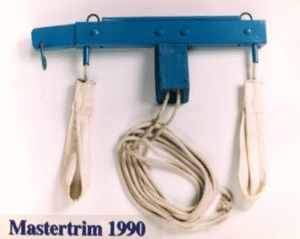
photo 1
This is how the ancestor of Redcord appeared – the TrimMaster device (photo 1), later known as TerapiMaster, and the technique was called Sling Exercise Therapy (SET-therapy). By the early 2000s, a special Neurac protocol ( Neuromuscular Activation ) was developed based on this concept, which combined therapeutic exercises in a sling with the principles of restoring muscle control. The leading developer of the Neurac method was physiotherapist Gitle Kirkesola, who in 2004 introduced this concept for the treatment of chronic pain in the back, neck and shoulders ( How the useful NEURAC method came about ).
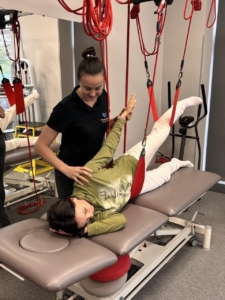
The peculiarity of Redcord/Neurac is the performance of exercises on unstable suspensions, when part of the patient’s body is supported by elastic cords. Such an unstable state forces the brain to actively involve small deep muscles and coordinate different muscle groups simultaneously ( Equipment | Redcord ). In fact, the system creates a safe environment without pain and overload, “breaking the vicious circle of pain and dysfunction” , giving the opportunity to relearn movement stereotypes correctly ( Equipment | Redcord ) ( Equipment | Redcord ). The Neurac protocol includes a gradual complication of exercises: from simply maintaining balance in the suspension to performing power movements. An important element is the use of vibration on the suspensions for additional muscle stimulation and activation of neuromuscular connections.
The effectiveness of Redcord suspension therapy has been confirmed by research. For example, in a clinical trial for patients with chronic neck pain, the group that additionally trained using the Neurac method showed significantly better results than the control group: pain and fatigue in the neck muscles decreased, balance, functional status and quality of life improved ( The effect of neurac training in patients with chronic neck pain – PMC ) ( The effect of neurac training in patients with chronic neck pain – PMC ).
In conclusion, the authors note that Neurac sessions effectively increase functional capabilities, reduce pain scores, improve balance and endurance in patients with chronic neck pain. ( The effect of neurac training in patients with chronic neck pain – PMC ).
Other studies also show success: a 2023 meta-analysis found that suspension exercises help with chronic low back pain, improving postural control and reducing the need for painkillers ( Put Your Back Pain To An End – Neurac Sling Exercise – Actify PT ) ( Research | Redcord ). Thanks to such evidence, the Redcord technique is now integrated into many rehabilitation programs around the world, and the manufacturer itself emphasizes that “there are numerous scientific studies that
 demonstrate the effectiveness of suspension therapy for improving back, neck, shoulder pain and muscle activation” ( Suspension Based Physical Therapy for the Endurance Athlete ).
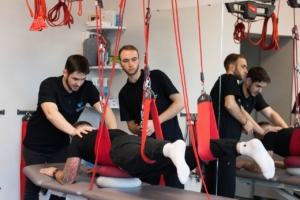
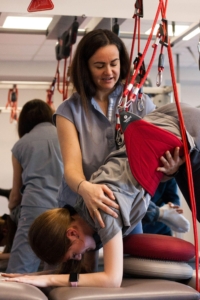
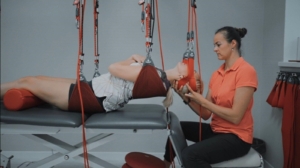
In practice, Redcord is used to recover from musculoskeletal injuries, neurological disorders (strokes, cerebral palsy), to improve balance and coordination. A therapy session often looks like a series of exercises in a suspended position: the patient, lying or standing, performs movements with his limbs or torso, and the therapist adjusts the tension of the sling and explains and supports the correct technique. The Neurac method has become synonymous with neuromuscular retraining , as it helps to “restart” the work of muscles that have been excluded from activity due to pain or injury. Importantly, this technique allows you to start rehabilitation even in the early stages after an injury – with minimal load and risk, and gradually increase the intensity without aggravating pain ( Treating Chronic Muscle and Joint Pain With “NEURAC” ).
Bubnovsky’s exercise bike (MTB) and kinesitherapy
The method of Dr. Sergey Bubnovsky is an example of an innovation that emerged in the post-Soviet space and became popular as an alternative to traditional drug treatment of chronic diseases of the spine and joints. Bubnovsky’s kinesitherapy is based on the principle of “movement therapy” : the patient, under the guidance of a therapist, performs an individually selected set of exercises aimed at deep muscles, pain relief and restoration of mobility. For this purpose, a special multifunctional Bubnovsky simulator (MTB) has been developed – a system of blocks, weights and shock absorbers, which allows you to do exercises in a decompression mode (without excessive axial load on the joints and spine).
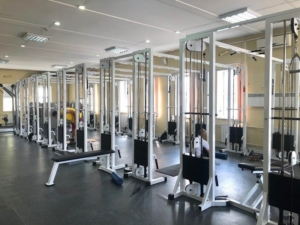
The uniqueness of the method , according to the author himself, lies in the fact that “for the treatment of a number of diseases, for the first time in world practice, Dr. Bubnovsky turned not to surgery or drugs, but to the internal resources of the body” ( Dr. Bubnovsky’s Methodology | Dr. Bubnovsky’s Kinesitherapy | Treatment according to the Bubnovsky Methodology ). That is, instead of operations or pills, the patient is offered active participation in his own recovery through correctly selected movements.
The MTB simulator creates conditions for relieving the load (anti-gravity effect) and decompression of the joints, which allows you to safely work even damaged areas ( Dr. Bubnovsky’s Method | Dr. Bubnovsky’s Kinesitherapy | Treatment according to the Bubnovsky Method). During classes, the patient performs strength and stretching exercises for various muscle groups: for example:
pull-ups with arms and legs at different angles, squats with shock absorption, exercises for stretching the spine. Thanks to the block system, the load can be precisely dosed and gradually increased as the muscles strengthen.
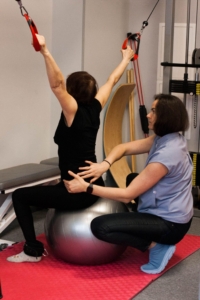 Bubnovsky’s method focuses on activating the deep muscles that stabilize the spine, improving blood supply to the joints, and reducing pain through movement. It is claimed that regular exercise helps restore normal muscle tone, improve mobility of the spine and joints, and reduce compression of nerve roots in osteochondrosis and hernias. Sergey Bubnovsky himself claims that his technique is “the only safe alternative to surgery and medication for diseases of the spine and joints ,” which has been proving its effectiveness for over 20 years ( Kinesitherapy of Doctor Bubnovsky ). Although such categoricalness causes debate in the medical community, thousands of patients have tried kinesitherapy in practice. The network of Bubnovsky centers has spread across Ukraine and other
countries, offering rehabilitation programs for osteochondrosis, intervertebral hernias, arthrosis, sports injuries, the period after endoprosthetics, and other conditions.
Scientific publications on the Bubnovsky method are limited. Independent researchers note that individual elements of kinesitherapy (decompression exercises, cryotherapy, sauna) can have a positive effect on reducing pain and increasing muscle tone, but no specific clinical trials have been conducted on the complex Bubnovsky method ( Bubnovsky Method: What It Is and How the System of Exercises for the Treatment of the Musculoskeletal System Works ).
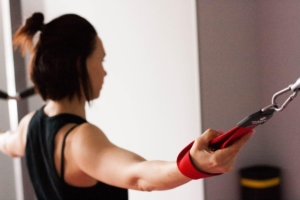
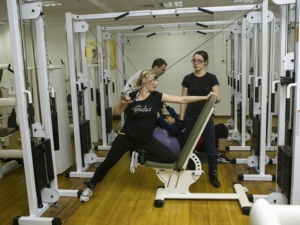
Official medicine treats kinesiotherapy more as a supplement that requires an evidence base. At the same time, the concept of active rehabilitation, on which the method is based, is fully consistent with modern trends in physical therapy. Many exercises from the Bubnovsky method are similar to generally accepted therapeutic exercises (only performed on a branded simulator) – for example, varieties of pull-ups, squats, stretching. Thus, we can say that kinesiotherapy has been integrated into the practice of physical therapy as one of the options for active recovery, especially popular in the Eastern European region. Patients who practice this method note a decrease in chronic pain, improved mobility and general well-being – these reviews encourage further scientific research to objectively assess the results.
Scientific evidence and international standards
The effectiveness of physical therapy is now confirmed by numerous scientific studies, and the field itself is developing on the basis of evidence-based medicine. Below are a few examples that illustrate how powerful a healing tool movement is and how modern methods affect treatment outcomes:
- Therapeutic exercises for back pain. International clinical guidelines recommend primarily conservative methods of treating back pain – physical exercises and patient education ( The effect of neurac training in patients with chronic neck pain – PMC ).
- Core stabilization techniques have been shown to be effective in meta-analyses: they significantly reduce chronic low back pain and improve functional status, as effective as or better than standard exercise programs ( A Systematic Review of the Effectiveness of Core Stability Exercises in Patients with Non-Specific Low Back Pain – PMC ) ( A Systematic Review of the Effectiveness of Core Stability Exercises in Patients with Non-Specific Low Back Pain – PMC ).
This means that the emphasis on deep stabilizing muscles is not a fashion statement, but a justified component of rehabilitation for spinal pain syndromes.
- Neurac Suspension Therapy (Redcord). Scientific studies have shown that adding suspension exercises improves balance and strength outcomes. In particular, studies published in the Journal of Physical Therapy Science showed that a course using Redcord in patients with chronic neck pain significantly reduced pain intensity on the VAS scale and the Neck Disability Index (NDI) compared to a control group ( The effect of neurac training in patients with chronic neck pain – PMC ).
In addition, improved balance (reduced area and speed of body sway during balance tests) and reduced neck muscle fatigue were noted ( The effect of neurac training in patients with chronic neck pain – PMC ). This confirms that the Neurac method helps restore normal muscle coordination and endurance. Another study in the same field found that hanging exercises for the lower back lead to improved spinal stability and reduced pain in patients with low back pain ( The Effect of the Neurac Sling Exercise on Postural Balance … ). Therefore, modern medical science supports the introduction of such innovative methods into clinical practice.
Anatomical chains and manual therapy. Although the concept of myofascial meridians is difficult to directly test clinically, there is a growing body of literature that indirectly supports its value. For example, the Journal of Bodywork and Movement Therapies reported findings that suggest the existence of anatomically connected muscle chains—morphological studies on autopsies confirmed the continuity of fascial structures along the lines described by Myers ( The Evidence of Anatomy Trains Myofascial Meridians – Art of Control ).
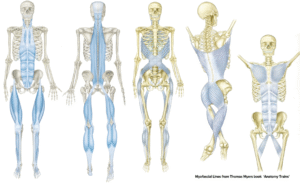
These findings explain the effect of some manual techniques, where an impact on one part of the body produces a result in a distant area. In addition, an integrative approach that takes into account fascia is used in osteopathy and massage: for example, studies have shown improvements in flexibility and posture after a course of myofascial release targeting the “superficial posterior chain” (according to Anatomy Trains) in patients with hamstring shortening. Although the concept of “anatomical trains” still needs further scientific confirmation, it has already stimulated new research and helps practitioners think more globally when assessing imbalances in the body.
- Bubnovsky’s method. There are no large randomized studies in the open access yet, dedicated directly to this author’s system, however, some works consider related approaches. For example, the journal Physical Rehabilitation and Balneology published observations of patients with osteochondrosis who were engaged in therapeutic gymnastics using decompression simulators: most noted a decrease in pain syndrome, increased spinal mobility, and improved quality of life indicators (according to questionnaires) after a 3-month course.
The authors attribute this to the activation of deep muscles and improved blood circulation in the affected segments of the spine. Similar results are also given in dissertations: kinesitherapy is considered an effective means of preventing musculoskeletal disorders in young people ( Kinesitherapy as a method of prevention of the musculoskeletal … ) ( [PDF] Download article (PDF) – Atlantis Press ). At the same time, it is worth noting that according to a 2024 review article, special scientific studies that would finally confirm the unique effectiveness of the Bubnovsky method have not yet been conducted ( Bubnovsky Method: What is it and how does the system of exercises for the treatment of the musculoskeletal system work ). Therefore, this method is based more on empirical experience and theoretical justifications of the author. It needs further evidence to be approved in international protocols, but it has already taken its niche as a popular direction of active rehabilitation.
- International rehabilitation protocols. Today, there are authoritative guidelines that regulate the use of physical therapy for various diseases.
For example: The clinical protocol for the treatment of low back pain, developed by the UK’s National Institute for Health and Care Excellence (NICE), recommends giving preference to active methods – patient education, maintaining physical activity, special exercises – and warns against unjustified prescribing of imaging or surgery in the early stages.
The updated American College of Physicians (ACP) guidelines for the treatment of acute and subacute low back pain (2017) emphasize that nonspecific treatments should be used first: heat therapy, massage, acupuncture, and exercise , while medications or injections should be used only for persistent pain. Similar protocols exist for stroke rehabilitation (recommending mobilization within 24–48 hours and intensive gait and balance training), knee osteoarthritis (recommending a hip strengthening and mobility program as the first line of therapy), and many others.
Physical therapy is also included in the WHO global initiative “Rehabilitation 2030” , which recognizes rehabilitation (including physical) as a key component of universal health care worldwide ( Rehabilitation – World Health Organization (WHO) ) ( Rehabilitation | World Physiotherapy ). Thus, modern medicine increasingly relies on active recovery and physical methods, which is reflected in health care standards and policies.
Conclusions
The path from classical therapeutic gymnastics to modern physical therapy is a history of knowledge accumulation, paradigm shifts, and innovation. From ancient treatises on movement therapy, through the formation of the first schools of “medical gymnasts” in the 19th–20th centuries, to the high-tech methods of the 21st century, physical therapy has grown into an independent, scientifically based profession.
Today, it combines the best of both worlds: the wisdom of centuries of movement therapy and the achievements of modern science about the human body. New concepts such as core stabilization and myofascial meridians have enriched our approach, making it more precise and holistic. Innovative methods – from suspension systems to multifunctional simulators – have expanded the possibilities of recovery even in the most difficult cases. And most importantly – physical therapy remains an accessible and natural method that activates the body’s internal resources for healing .
For a broad educated reader, it is important to understand:
Modern rehabilitation is not a passive expectation of recovery, but an active process where the patient and the therapist work together to restore health. Movement, performed correctly, turns into medicine without side effects. The history of physical therapy demonstrates that even the simplest tool – our own body – when used correctly can create miracles of recovery. Therefore, relying on the experience of generations and scientific discoveries, physical therapy today confidently steps forward, helping people around the world live more actively, safer and without pain.
If you need help to quickly and efficiently return to an active physical life , contact the specialists of our PhysioSpace functional recovery center in Irpin at 27 V. Stus St., tel. 0937001040.