



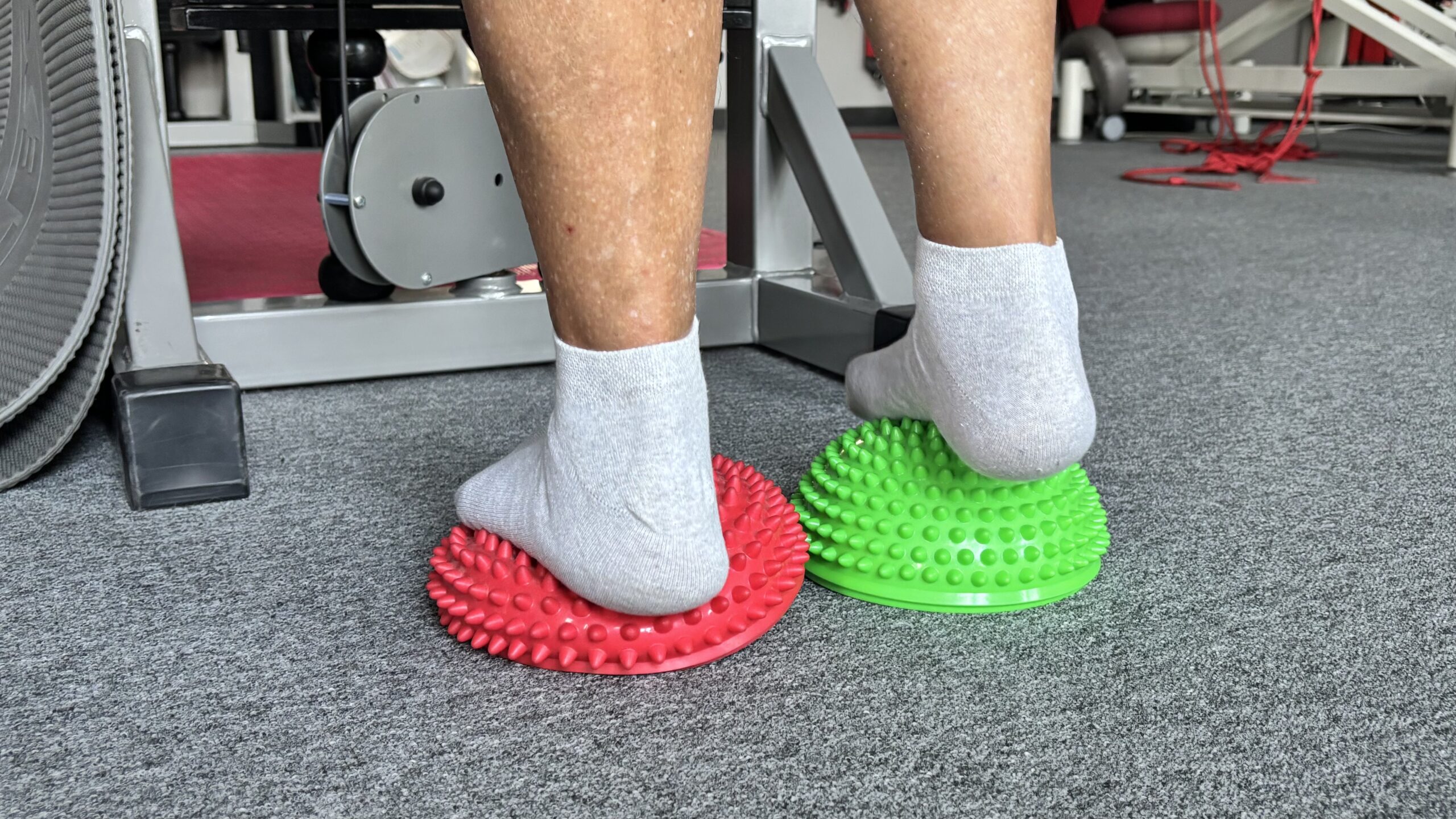
Sharp, piercing heel pain during the first steps after waking up is a common problem that can throw anyone off their usual routine. Putting weight on the foot can feel as if you have stepped on a sharp nail, while an ordinary walk turns into a real challenge.
If you are wondering why your heel hurts, the most likely cause is plantar fasciitis. This condition involves microscopic damage and inflammation of the thick connective tissue in the foot and, without appropriate physical therapy, may become chronic. In this article, we will examine the causes of the condition, dispel common myths about “heel spurs,” and explore evidence-based recovery methods.
What Is Plantar Fasciitis and Why Does Heel Pain Occur?
The plantar fascia is a thick band of connective tissue that runs along the sole of the foot, connecting the heel bone to the toes. It acts as a natural shock absorber, supports the longitudinal arch of the foot, and helps absorb impact during walking or running.
When the load placed on the foot exceeds the tissue’s ability to recover, microscopic damage can occur where the plantar fascia attaches to the heel bone. The body attempts to repair these areas, which can lead to inflammation, swelling, and pain.
The Mechanics of the Problem: Anatomy of the Plantar Fascia
During nighttime rest, the plantar fascia remains in a shortened position. When you get up in the morning, the previously shortened fibers are suddenly loaded and stretched, which can aggravate the irritated tissue. This is why morning heel pain is a classic symptom of plantar fasciitis.
How Is Plantar Fasciitis Different From a “Heel Spur”?
It was once widely believed that heel pain was caused by a bony growth, known as a “heel spur.” However, modern research shows that the spur itself is not necessarily the source of pain. It is generally considered a secondary response to prolonged stress on the plantar fascia. Pain is more closely associated with the irritated and degenerative tissue around the attachment site than with the bone spur itself.
Who Is at Risk: From Athletes to Military Personnel
Overloading the foot can occur due to a number of factors, from suddenly changing footwear to prolonged marches or intense physical activity.
| Category | Main Risk Factor | Effect on the Plantar Fascia |
| Athletes and runners | Impact loading, running on hard surfaces | Repeated tissue stress without adequate recovery |
| Military personnel and veterans | Carrying heavy equipment, wearing combat boots | Excessive weight-bearing and rigid footwear |
| Older adults | Age-related changes, loss of elasticity in the heel fat pad | Reduced natural shock absorption in the heel |
| People with sedentary jobs | Weakness in the gluteal and calf muscles | Muscle-tendon chain imbalance |
Main Symptoms: How to Recognize Plantar Fasciitis
The clinical presentation of plantar fasciitis is relatively characteristic and may include the following symptoms:
- Sharp heel pain in the morning or after prolonged sitting that decreases after 10–15 minutes of walking.
- Increased discomfort toward the end of the day or after intense physical activity.
- Localized pain when pressing on the inner part of the heel.
- A feeling of stiffness in the Achilles tendon and calf muscles.
Modern Recovery and Physical Therapy Methods
Evidence-based medicine favors active rehabilitation over simply waiting for symptoms to resolve or relying primarily on injections. A comprehensive physical therapy program for heel pain aims to reduce pain and gradually restore the tissue’s ability to tolerate load.
Shockwave Therapy and Manual Techniques
Focused or radial shockwave therapy may help reduce pain and stimulate tissue remodeling. Manual therapy and trigger-point techniques may help reduce excessive muscle tension in the deeper muscles of the lower leg.
Stretching and Strengthening Exercises
Progressive, appropriately dosed loading is a key component of treatment. Regularly strengthening the plantar fascia and calf muscles can improve the tissue’s capacity to tolerate load and support normal foot function.
Orthotic Insoles and Taping
Orthotic insoles can support the arch of the foot and help distribute load more evenly. Kinesiology taping may be used as an adjunctive treatment to temporarily reduce strain on the plantar fascia and provide symptom relief.
An Effective Set of Exercises for Home
Perform this exercise routine regularly to help reduce symptoms:
- Self-myofascial release with a massage ball:
- Sit on a chair and place a tennis ball or massage ball under your foot.
- Gently roll the ball from your heel toward your toes for 2–3 minutes.
- Plantar fascia stretch:
- While sitting, place the affected foot over the opposite knee.
- Grasp the toes with your hands and gently pull them toward you until you feel a stretch along the sole of the foot.
- Hold for 20–30 seconds and repeat 3 times.
- Slow heel raises:
- Stand with the balls of your feet on a step, placing a rolled-up towel under your toes.
- Slowly rise onto your toes (3 seconds up, hold for 2 seconds, 3 seconds down).
- Perform 3 sets of 8–10 repetitions every other day.
Comparing Recovery Methods: What Really Works?
Understanding how to treat plantar fasciitis can help you avoid ineffective treatments and unnecessary expenses.
| Method | Speed of Pain Relief | Long-Term Effect | Risks and Side Effects |
| Rest and NSAIDs | Fast (days) | Low (pain may return) | Gastrointestinal side effects |
| Physical therapy and exercises | Moderate (weeks) | High (addresses contributing factors) | Generally low when appropriately prescribed |
| Steroid injections | Very fast | Low / Moderate | Risk of plantar fascia rupture and fat-pad atrophy |
| Shockwave therapy | Moderate | High | Minimal temporary discomfort |
How to Prevent Recurrence: Advice From a Physical Therapist
For successful foot rehabilitation, follow these simple guidelines:
- Replace running shoes every 500–800 km of running or active use.
- Avoid walking barefoot on hard surfaces (laminate flooring, tile) during a flare-up.
- Increase physical activity gradually, avoiding sudden increases in training volume.
- Include exercises that strengthen the muscles of the foot and lower leg in your daily routine.
FAQ
Can I Run or Exercise If My Heel Hurts?
During an acute flare-up, it is generally advisable to reduce or temporarily avoid running and other high-impact activities. You can switch to lower-impact activities such as swimming or using a stationary bike. A gradual return to running should be based on your symptoms and, when appropriate, guided by a physical therapist.
Do Home Remedies and Heat Help?
There is limited evidence that compresses, heat treatments, or hot foot baths improve plantar fasciitis. If cold provides temporary pain relief, you can try applying a cold pack locally for 10–15 minutes while protecting the skin.
How Long Does Full Recovery Take?
Improvement may begin within several weeks with consistent rehabilitation, although recovery varies from person to person. Symptoms can take several months to fully resolve, depending on how long the condition has been present and other individual factors.
Summary
Heel pain is not a life sentence but a signal that your foot may be experiencing excessive or poorly tolerated load. Seeking timely help from a rehabilitation specialist, choosing appropriate orthotic support when indicated, and regularly performing exercises for heel pain can help you return to an active lifestyle with less pain. Don’t ignore persistent discomfort — take care of your foot health today!